
Retention decisions · Replacement specification
Water Damage Restoration in Twickenham
We assess water-affected Twickenham interiors, distinguish a preference to retain materials from an accepted condition decision and define the agreed replacement finish.
- Retention preferences assessed against material condition
- Replacement choices specified before supply
- Drying and physical recovery distinguished
Affected areas assessed
Drying arrangement defined
Changes explained before work
Interior scope agreed
We assess what can remain before defining replacement
We plan restoration in Twickenham homes where the client wants to retain as much of the existing interior as reasonably possible. We record that preference and examine the accepted materials before proposing a response. The appointment distinguishes an intention to retain from a condition decision, and a replacement allowance from a confirmed product selection.
We make the desired retention outcome clear without promising it before the material assessment. That allows the proposal to explain an appropriate retained treatment, a replacement option or a further decision still required. We identify the actual surfaces in each option so the client understands what changes. The result is an accepted restoration specification rather than a broad assurance that every original component can be saved or exactly reproduced.
We establish safe assessment before moving valued materials
We gather the incident information without asking occupants to retrieve or dismantle affected material from an unsafe area. Source and utility concerns need the appropriate responsible provider. Suspected contamination or unsafe construction can change what may be retained and how it is handled. An intention to save an item does not bypass the required safety or specialist assessment.
We turn a retention preference into an assessed specification
Record the preferred outcome
We establish the incident, safe access and the particular materials the client hopes to retain.
Assess the existing item
We inspect accessible condition and identify the information needed for a responsible retention or renewal proposal.
Agree the drying response
We define equipment and review responsibilities without guaranteeing recovery of every original component.
Confirm the material decision
We review the actual condition and accepted replacement information before authorising supply or the finishing stage.
Review retained and new surfaces
We complete the appointed reinstatement and record which elements were treated, renewed or left outside the accepted package.

We identify the materials behind the retention request
We inspect accessible affected surfaces and note the item or field the client hopes to keep. We describe physical changes, material information and any access limit relevant to the decision. An attractive appearance or sentimental preference is useful context, but it does not establish the technical condition of the material or permit an unsuitable reinstatement.
The review identifies the particular item involved in the request and the accessible information supporting it. A finish sample, old description or personal preference can help explain the desired appearance without establishing the whole current condition. We record the remaining limits before proposing disturbance. Where the decision requires another specialist input, that interface is identified rather than absorbed into an ordinary drying or decorative appointment.
We review drying information without pre-deciding the outcome
We consider the relevant material observations alongside the accepted drying response. An encouraging change can inform the next review without committing the room to retention before its physical condition and intended finish are understood. We identify any additional information needed, distinguishing an assessment still in progress from a final accepted material decision.
We use the agreed drying review to inform the response without treating it as a commitment to the client’s preferred material outcome. The relevant finding describes the accessible construction and its context. Physical damage, intended use and the selected finish remain part of the decision. If retention cannot yet be accepted, we explain the outstanding information instead of allowing an improved indication to imply every original property has recovered.
We define the drying task without guaranteeing salvage
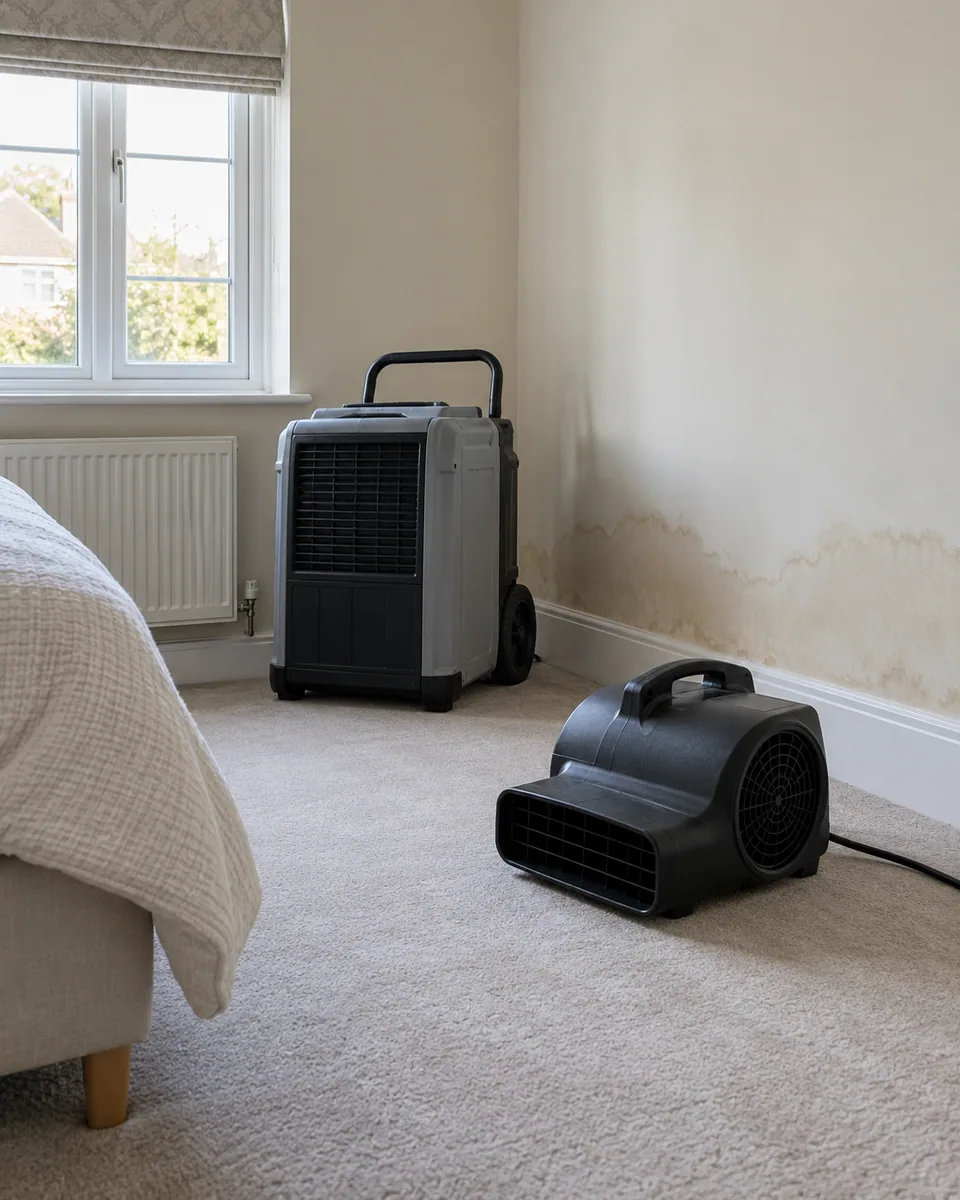
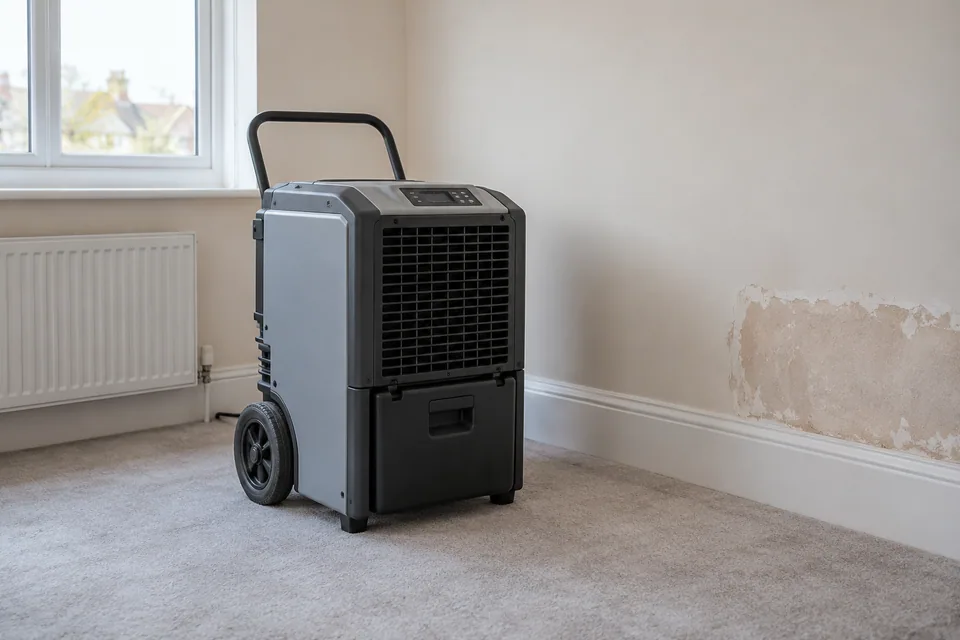
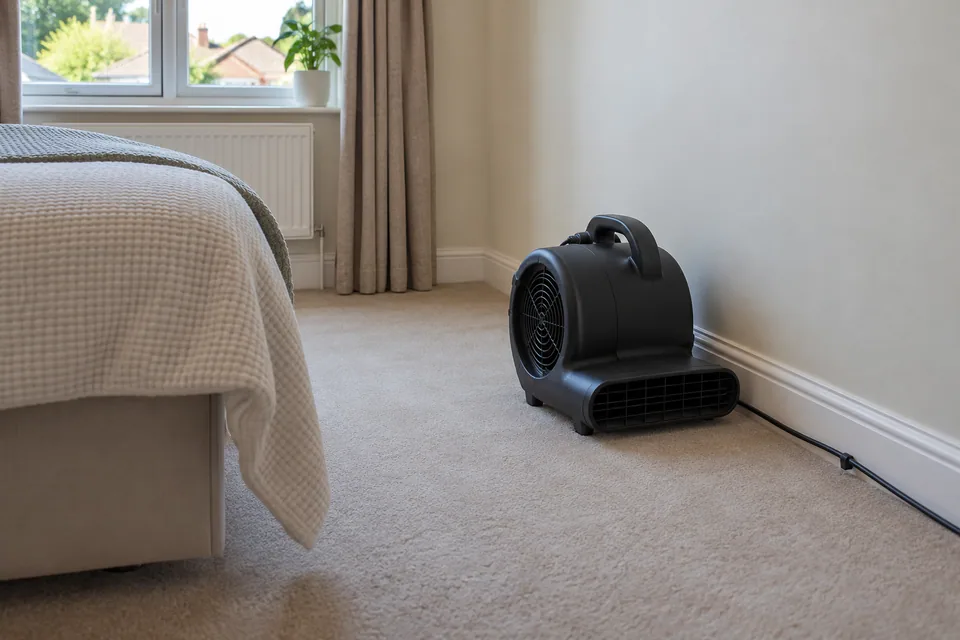
We agree suitable dehumidifiers, air movement and operating responsibilities for the assessed construction. The equipment arrangement supports the accepted response but is not sold as a promise that every original finish will be saved. We explain the review points and any practical access requirements, keeping source correction and appropriate safety responsibilities separate from the drying appointment.
The drying arrangement identifies appropriate equipment, operating responsibility and review for the accepted material task. We explain its role separately from a promise of salvage or a new supply decision. Where the response or access changes, we review the proposed adjustment before proceeding. A previous recovery result for another room is not used as a universal duration or a guarantee that this material will be suitable to retain.
Drying and material review
| Provision | Purpose | Limit |
|---|---|---|
| Dehumidifier | Air-moisture removal | No salvage guarantee |
| Air mover | Accessible circulation | Not physical recovery |
| Material observation | Inform retention decision | Not all hidden faces |
| Product review | Confirm proposed replacement | Not original reproduction |
We compare the retained item with the proposed replacement
Where renewal is appropriate, we identify the actual product and relevant requirements before supply is accepted. A similar broad description does not ensure the same construction or installation response. The proposal distinguishes the existing material, the selected replacement and the receiving condition needed, without promising exact reproduction of an aged or unavailable finish.
Retention and replacement decisions
| Stage | What it establishes | What remains separate |
|---|---|---|
| Retention preference | Desired outcome | Material acceptance |
| Condition review | Accessible findings | Product selection |
| Replacement proposal | Suggested specification | Accepted order |
| Final instruction | Appointed material and field | Unrelated items |
A preference and a specification are different stages
The original material is valued
We record the preference and assess the actual condition rather than promise retention before the response is understood.
A similar replacement is proposed
We review the selected material and installation requirements instead of relying on the broad appearance description alone.
A supply decision remains open
We identify its effect on the next activity before describing the proposal as ready for ordering or installation.
Findings and the next choice
| Finding | Relevant concern | Our next step |
|---|---|---|
| Changed physical condition | Retention suitability | Assess actual item |
| Unavailable old finish | Replacement specification | Agree current option |
| Unconfirmed product | Supply uncertainty | Confirm before ordering |
| Retained/new junction | Finishing field | Define accepted interface |
Twickenham address and restoration access
For Twickenham enquiries around TW1 and TW2, we confirm the complete address, rooms and entrance. These outward districts are approximate references and do not establish an exact event-zone boundary.
Richmond publishes the Twickenham Event Zone map and parking information. We check current arrangements relevant to the assessment and material visits without reproducing event dates or permit terms in the proposal. The vehicle plan remains separate from the material retention and supply decisions for the property.

We reinstate the accepted material and decorative field
Our agreed package can include suitable flooring, plastering, preparation and paintwork. We record the actual accepted retention or renewal decision and its finishing extent before work proceeds. At completion we distinguish treated retained surfaces from new material and explain any remaining excluded item, so the handover reflects the appointment rather than the original preference alone.
We separate provisional choices from accepted supply
The quotation explains assessed activities and any product decision still outstanding. A provisional allowance does not identify an ordered replacement or establish that every alternative has the same preparation needs. We review the proposed selection and any effect on the accepted work before confirming a changed scope or cost. Each option states its actual materials and room field so the client can understand the difference before accepting the proposed supply.
Water damage restoration questions in Twickenham
Does the material assessment determine who was financially at fault for the water incident?
Our assessment defines the relevant building condition and proposed restoration response. It is not presented as an allocation of financial fault between the parties involved in the incident.
Can a provisional replacement allowance be treated as an order for a particular product?
We identify the selected supply and authorisation separately. An allowance communicates a pricing basis; it does not itself confirm an order or complete specification.
Can a water-darkened remnant be the sole approval reference for the original pre-incident colour?
We identify what the sample actually shows and consider the available finish information. A changed remnant is not treated as a guaranteed record of the appearance before wetting.
Does rejecting one proposed replacement automatically approve retention of the damaged original?
We review the remaining options and actual condition. Declining a product is not a technical decision that the original material is suitable to keep unchanged.
Does a replacement material’s thickness establish that it responds to wetting like the original?
We review the actual construction and material requirements. Equal thickness does not establish the same moisture response, physical behaviour or suitable restoration approach.
Can two alternative reinstatement proposals use different room extents without making that difference clear?
We identify the accepted field in each option. The client can distinguish a local material response from a broader replacement package rather than compare unlike extents as though they were identical.
Can an accepted retention decision for one room be applied to a different material in another room?
We assess the relevant item and condition. A decision tied to one material and location is not a general instruction for all affected interiors.
Does a client-supplied replacement automatically transfer the condition decision away from the restoration assessment?
We still identify the receiving condition and accepted installation boundary. Supply ownership does not remove the need to assess whether the appointed background and selected finish can proceed together.
Related property services
Discuss retention and the replacement choices
Tell us which Twickenham materials you hope to retain and what changed after wetting. We will define the assessment and the accepted reinstatement specification.