
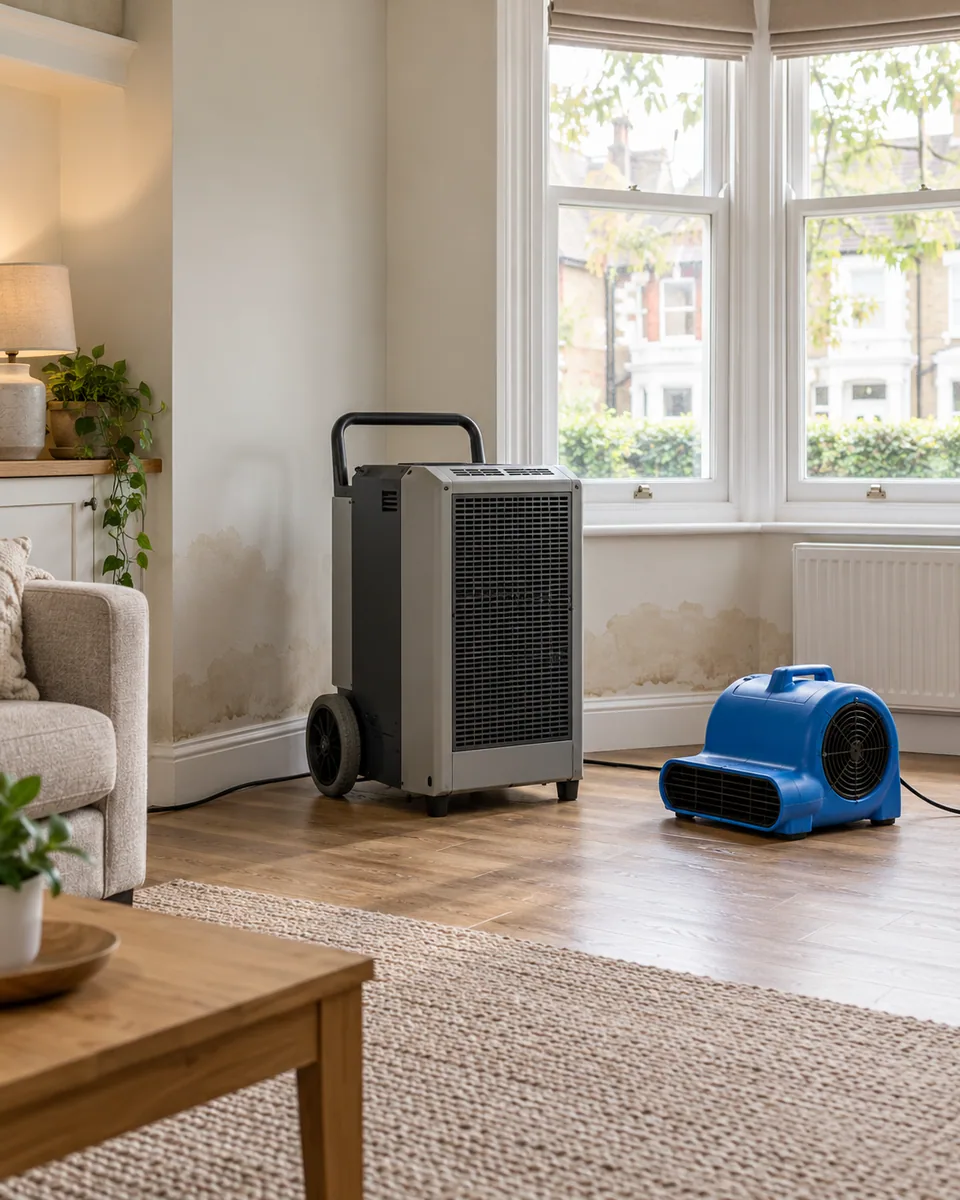
Drying access · Defined interior recovery
Water Damage Restoration in Streatham
We assess water-affected Streatham interiors, coordinating drying access, retained room items and the reinstatement work expressly accepted.
- Drying layout related to actual room access
- Retained items and working boundaries identified
- Progress reviews linked to appointed reinstatement
Room arrangement recorded
Practical equipment positions
Defined review access
Interior scope confirmed
We plan the room around the accepted restoration task
We restore water-affected interiors in existing Streatham properties. Drying equipment needs a workable arrangement around retained items and access to the affected materials. We define those relationships before the task depends on an assumed route through the room or an obstructed surface.
Our appointment can include moisture assessment, appropriate dehumidifiers and air movers, progress reviews and agreed flooring, plastering or paintwork. Equipment space and material access are part of the same practical plan. We identify what is moved, what remains and the responsibilities supporting the accepted work.
We establish safe access before arranging the room
We ask about continuing water entry, affected utilities and any unstable or uncertain area. Appropriate safety and specialist responsibilities are identified before ordinary equipment placement. We do not ask occupants to move heavy or affected items through unsafe space to make an inspection possible.
We identify who handles continuing water entry separately from the room-access and finish plan. Suspected contamination and structural concerns need appropriate provision. Available incident information supports the next review without replacing the checks needed before an ordinary restoration appointment is accepted.
From room access to accepted reinstatement
Establish the incident and prerequisites
We gather source and room information, identifying appropriate safe-access and specialist responsibilities before ordinary restoration begins.
Record materials and practical restrictions
We inspect accessible damage and relevant moisture information, noting retained items and areas needing further agreed access.
Define the equipment and review layout
We identify actual equipment positions, operating responsibilities and access needed for the accepted drying task and progress reviews.
Prepare the reinstatement arrangement
We review material findings and agree clearance, protection and finish boundaries before the next interior stage depends on them.
Complete and inspect the appointed work
We carry out accepted reinstatement, review the named surfaces and record remaining actions and relevant product guidance.
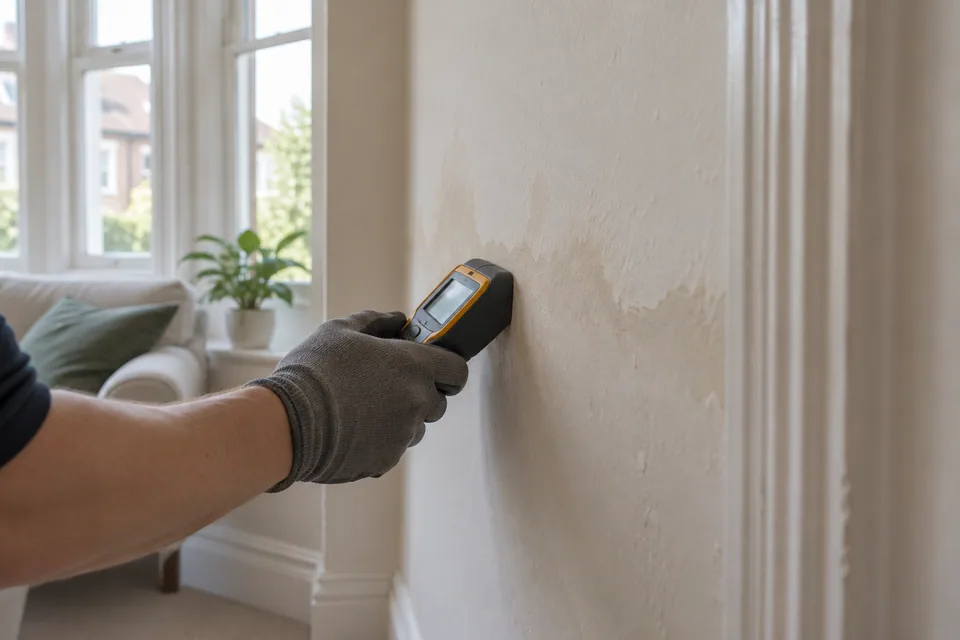
We inspect accessible materials and room restrictions
We record visible damage and relevant moisture information alongside the actual retained layout. Furniture and fixed items can restrict both inspection and circulation. We distinguish accessible observations from areas that remain concealed rather than describe the whole room as directly assessed.
Any further access, movement or exposure is expressly agreed with its extent and responsible party. An instruction to assess water damage does not silently include dismantling every retained installation. The proposal identifies the practical information needed before the accepted response is settled.
We record the agreed storage position for replacement materials.
We keep review access connected to the material findings
Relevant material and location context are retained when progress is reviewed. If an item blocks an agreed observation point, we record that limit rather than substitute an unrelated accessible surface without explanation. The review describes the access actually achieved within the accepted task.
Where air-condition information supports the assessment, it is considered alongside physical findings. Equipment operation does not establish the condition of every concealed material. We identify further checking needed before the next finish or closure is accepted, rather than assume a convenient room layout proves readiness.
We define circulation around the actual room arrangement
Appropriate dehumidifiers and air movers are arranged using the assessed materials, practical setting and actual supplied equipment instructions. We identify placement, operation and review responsibilities. A visible space around one machine does not establish that every intended air path or access requirement remains unobstructed.
The plan can be reviewed when retained items or working conditions change. Material behaviour, wetting extent and access influence the programme, so fixed drying periods are not promised. Equipment-only hire is distinguished from managed restoration and from the later accepted interior reinstatement.
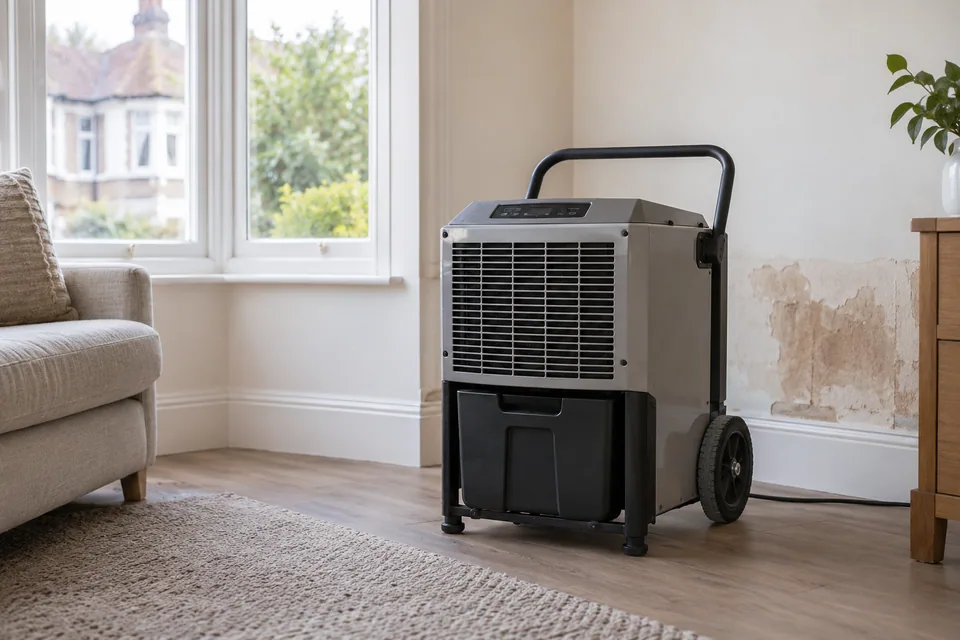
Drying layout and practical limits
| Provision | Role | Limit |
|---|---|---|
| Dehumidifier | Remove air moisture | Needs accepted operating setting |
| Air mover | Support circulation | Objects can alter intended path |
| Progress review | Assess relevant findings | Access must be recorded |
| Equipment hire | Supply agreed units | Not automatic room clearance service |
We distinguish obstruction from material condition
Plaster, plasterboard, timber, floor coverings and insulation have different assessment questions. A retained object can conceal a surface without being the affected building material itself. We identify available construction and access information before deciding suitable retention, renewal or replacement.
Physical deterioration remains relevant even where drying progress improves. We do not assume material recovers its original shape or bond through ordinary equipment operation. Specialist or structural responsibilities are separately confirmed, with any further access need identified before closure.
Materials and access references
| Material or item | Concern | Assessment focus |
|---|---|---|
| Wall lining | Concealed affected surface | Actual access limit |
| Floor covering | Retained objects above | Defined material review |
| Fixed installation | Restricted background access | Agreed movement responsibility |
| Household contents | Separate from building finishes | Appointment boundary |
Access findings we resolve through the proposal
A retained item blocks an affected surface
We record the assessment limit and agree appropriate movement or further access before describing the concealed condition.
The room layout changes during drying
We review the accepted arrangement rather than assume the original equipment and review access remain unchanged.
The finish stage needs more working space
We identify clearance and protection responsibilities before reinstatement proceeds around retained items.
Room change and next decision
| Change | What we establish | Accepted response |
|---|---|---|
| Furniture added | Effect on working layout | Review arrangement |
| Door position changes | Actual air and access route | Confirm practical plan |
| Covered observation point | Assessment access limit | Record and agree next check |
| Finish work starts | Different space requirement | Define clearance and protection |
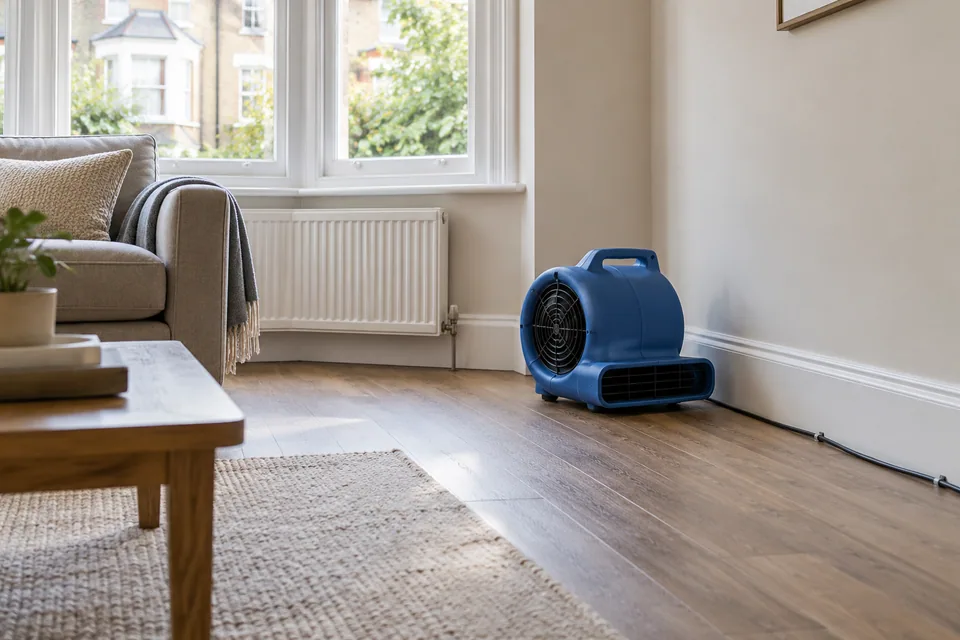
Planning the Streatham working and access boundaries
For enquiries around SW16 and SW2, we confirm the exact premises and affected rooms; the outward codes are approximate. We agree equipment routes and occupied-area access, identifying retained finishes and household items that need protection during the appointment.
Lambeth publishes a Streatham Common conservation-area profile. We consider relevant property instructions separately from the technical restoration response, without inferring construction or permissions from a district name. The accepted room and finish boundaries are established from the actual premises.
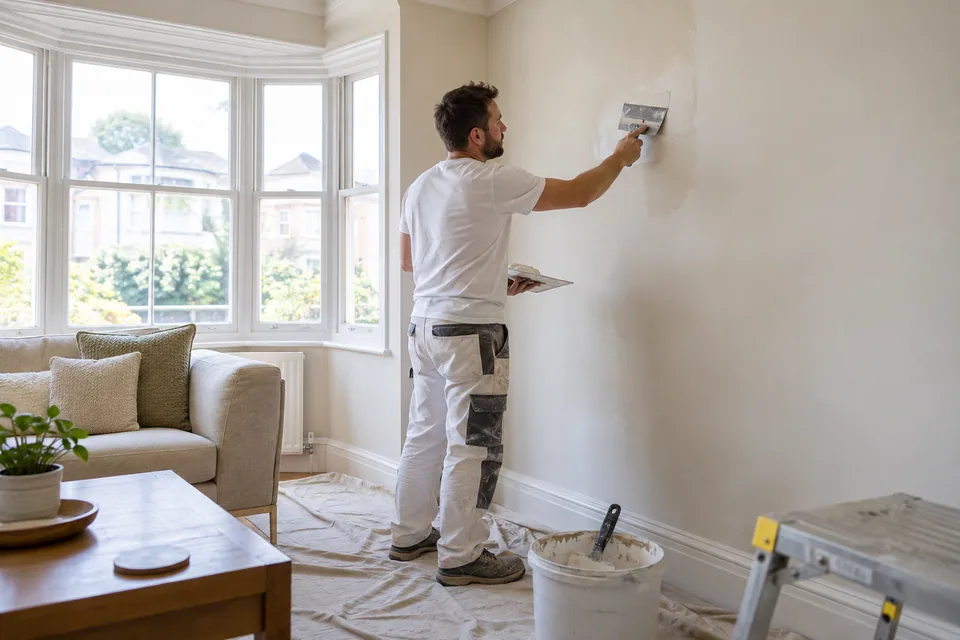
We agree the room arrangement needed for the finish stage
The proposal records appointed preparation, flooring, plastering and paintwork where included. The working space for reinstatement may differ from the earlier equipment position. We identify retained-item movement and protection responsibilities before the next trade activity depends on access.
Material condition and selected finish requirements are reviewed before the accepted work proceeds. Separate technical dependencies remain confirmed with their responsible provider. At handover we inspect the named surfaces and record outstanding actions, distinguishing restored building finishes from household items outside the appointment.
We quote practical access and the accepted interior work
Assessment, equipment and progress reviews, agreed exposure and reinstatement extent influence the quotation. Restricted access or retained items can affect organisation without changing the room’s net area. We identify handling and clearance provision rather than leave it as an unexplained extra assumption.
The sequence follows safe access, observed progress and material readiness. Changed room arrangements or further findings are explained before work extends. The authorised contact agrees the response, with no universal price or promised duration attached to every occupied-property incident.
Water damage restoration questions in Streatham
Does an air mover’s visible outlet direction establish an unobstructed path across the intended room surface?
We review the actual equipment setting and retained items. The machine’s direction alone does not establish that the planned route remains clear beyond the immediate outlet.
Can a temporary furniture cover be treated as part of the accepted airflow arrangement without review?
We consider the actual room condition and equipment information. A protection item can change the working layout, so its presence is reviewed before the original arrangement is assumed unchanged.
Does an air mover’s selected setting identify the air speed at a distant affected surface?
We review the actual room and equipment arrangement. A machine setting is not treated as a direct measurement of conditions at another location across retained objects and room geometry.
Can two air movers aimed against each other be assumed to double the useful circulation along the intended route?
We define the actual arrangement using the assessed task and supplied equipment information. Adding opposing units is not treated as a simple arithmetic increase in effective circulation at the appointed surface.
Can an improvised fabric sleeve be attached to an air mover solely to reach a concealed space?
We confirm the actual equipment and permitted arrangement before any accessory is accepted. Ordinary room drying does not authorise an improvised duct or establish a specialist concealed-space drying method.
Can household belongings be recorded as restored building finishes because they were moved during the appointment?
We distinguish handling from the accepted restoration work. Moving an item for access does not establish treatment or reinstatement of that separate household content.
Can an access route be described as maintained if stored replacement materials occupy it between visits?
We review the actual working arrangement and agreed storage position. An intended route is not recorded as available merely because it was clear at the first appointment.
Does a reinstatement quotation include returning every household item to its former position automatically?
We agree handling and return responsibilities as part of the practical scope. Completing the named building finishes does not silently define an unrestricted contents-moving service.
Related property services
Discuss the room layout and the restoration it needs
Call 020 4638 4862 with your Streatham address and affected areas. We will connect assessment, practical drying access and the accepted reinstatement scope before work proceeds.