

Floor assemblies · Accepted exposure
Water Damage Restoration in Putney
We assess water-affected Putney floors and accessible adjoining construction, defining any accepted exposure before monitored drying and interior reinstatement.
- We record which layer can actually be examined
- We plan equipment around the accessible floor setting
- We agree the receiving condition before a new covering
Affected construction assessed
Source responsibilities identified
Drying response reviewed
Accepted finishes reinstated
We identify the floor assembly before defining its restoration
The visible floor covering is only one part of a water-affected room. We assess the accessible material and information about the construction beneath it before proposing intervention. Exposure, drying and replacement are separately described activities; one does not commission the others automatically.
Our Putney restoration work includes moisture assessment, appropriate drying equipment and accepted interior reinstatement. We identify the surfaces available for inspection and the limits created by retained floors or fixed items. The response follows actual findings rather than a promise that every covering can be lifted and reused.
We establish safe entry before any floor is disturbed
We discuss continuing water entry, affected services and unstable walking surfaces. Relevant safety assessment and source responsibilities must be established before ordinary restoration proceeds. We do not ask occupants to lift coverings, cut into construction or test wet electrical equipment to supply initial information.
Photographs and available floor product records can help identify the setting if obtained safely. We distinguish an accessible surface observation from knowledge of the assembly. Suspected contaminated water or an unresolved structural concern requires its appropriate confirmed provider before a normal drying and finishing proposal is accepted.
Our assessed restoration sequence
Identify the floor setting
We establish safe access, incident information and the products or construction known before the visit.
Assess accessible layers
We inspect the material available for review and record what remains concealed beneath retained finishes.
Agree purposeful exposure
We define any accepted opening, its extent and material-handling responsibility before disturbance.
Review drying and material decisions
We consider relevant findings against the accepted equipment arrangement and the suitability of retention or replacement.
Reinstate the named floor work
We complete accepted preparation and finishes, then distinguish renewed components from retained layers and remaining matters.
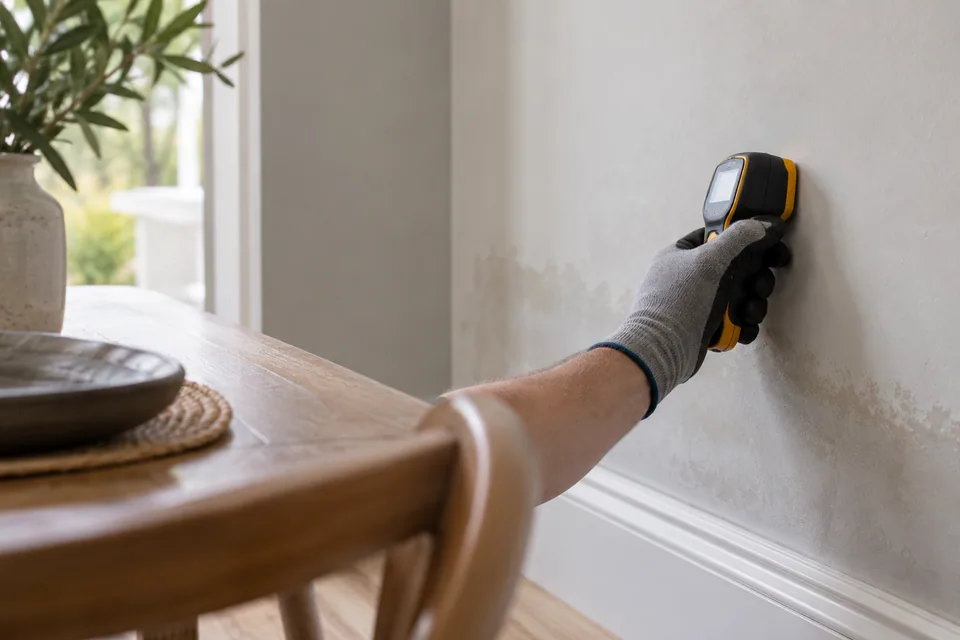
We record which layer can actually be examined
We inspect accessible covering condition, edges and relevant base information, noting swelling, loosened material and visible changes. Findings are attached to the actual layer and location. A smooth upper face does not describe the condition beneath a retained covering or establish that all layers share its response.
Further exposure is proposed with a defined purpose and extent. We identify who will undertake the accepted intervention and deal with the resulting material. The proposal does not treat a request to assess one affected area as permission to dismantle an entire floor or disturb unrelated construction.
We also identify the relationship between the proposed opening and any selected reinstatement joint. Investigation access is not automatically placed to suit a decorative line if that would fail to answer the accepted assessment question.
We compare findings from the same construction reference
We review moisture information with its material, method and location. A finding on the covering and a later observation on an exposed base are useful but different references. We do not combine them into an apparent continuous measurement simply because they occupy the same position in the room.
Progress reviews consider the accepted equipment arrangement and any changed access. Newly exposed material can alter the understanding of the task, and we explain that finding before relying on a revised response. Concealed construction remains identified as such until the relevant assessment is available.
We plan equipment around the accessible floor setting
We define dehumidifier and air-movement roles for the assessed area and relevant equipment instructions. The arrangement considers clear access and the surfaces available for the task. Equipment in the room is not described as proof that every closed layer is receiving an adequate response.
Operating and progress-review responsibilities are stated separately from equipment hire. Any accepted opening or removal can change placement and access needs, which are reviewed rather than assumed unchanged. We do not use a universal drying period or tank observation as a substitute for the relevant material findings.

An accepted exposure proposal
| Item | Defined information | Why it matters |
|---|---|---|
| Purpose | Finding the opening must resolve | Avoids unnecessary disturbance |
| Extent | Named position and material | Sets intervention boundary |
| Responsibility | Accepted provider and handling | Separates specialist concerns |
| Next review | Condition exposed for assessment | Informs revised work |
We review retention and replacement by material
Timber, laminate, vinyl, carpet and the receiving construction can require different decisions after wetting. We assess accessible condition and relevant product information. Drying does not promise restored adhesion, reversed swelling or renewed integrity for every floor product.
The accepted proposal identifies which materials remain, which require suitable renewal and which are to be replaced. Any hazardous-material or specialist contamination concern is separated from ordinary interior intervention. We avoid assuming that every exposed layer is disposable or that every retained covering can be returned to its earlier state.
Layer-specific assessment
| Reference | What it describes | Separate question |
|---|---|---|
| Covering face | Accessible upper condition | Material beneath it |
| Exposed base | Receiving construction at opening | Unopened areas |
| Retained layer | Material remaining in assembly | Suitability for selected finish |
| New covering | Accepted reinstatement product | All lower layers renewed |
Conditions we resolve before the next stage
The upper finish conceals the receiving base
We identify the access limit and any proposed further assessment rather than assume its condition.
An opening reveals a different material
We record the new construction reference before revising the restoration response.
The covering cannot be accepted for reuse
We explain the material decision and revised reinstatement proposal before further work.
Moving from assessment to installation
| Stage | Relevant decision | Not automatic consequence |
|---|---|---|
| Open a local area | Review exposed condition | Whole floor dismantled |
| Dry accessible construction | Review material findings | Every covering reusable |
| Select replacement | Confirm receiving requirements | Concealed concern resolved |
| Complete floor finish | Record accepted result | All layers replaced |
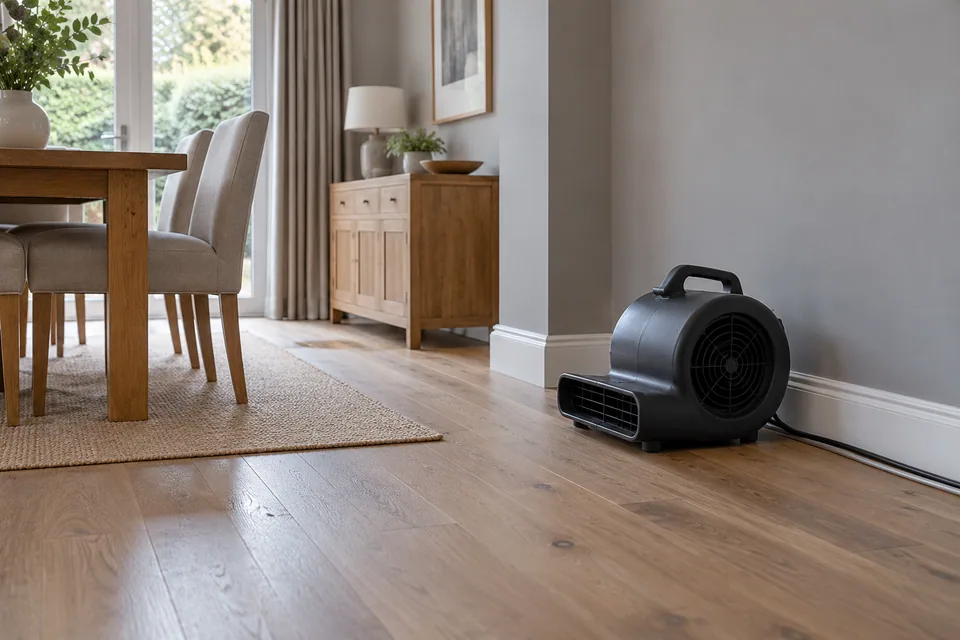
Restoration planning at the Putney address
Putney enquiries often reference SW15, used as an approximate outward district. We confirm the full address, room access and floor setting rather than infer the construction from the postcode.
Wandsworth provides conservation guidance. Where the actual property or proposed intervention needs a relevant check, we identify that responsibility before disturbance and keep it separate from the ordinary drying and reinstatement appointment.
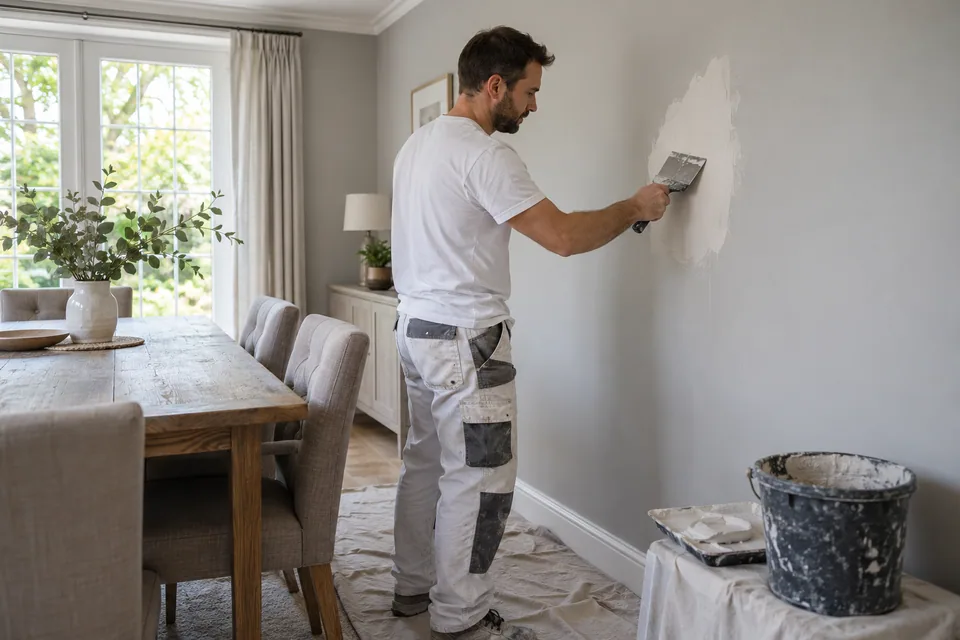
We agree the receiving condition before a new covering
We review relevant findings and selected flooring requirements before completing accepted preparation and installation. Adjoining plastering, skirting or paintwork is identified where included. A new upper covering is not used to close an unresolved construction concern merely because its appearance meets the decorative brief.
At completion we identify the new floor work and retained layers, along with any outstanding separate responsibility. The handover explains the appointed result and relevant care information. It does not describe an accepted upper-floor installation as replacement of every layer in the assembly.
We make investigative and finishing stages identifiable
The quotation separates accepted assessment, equipment, review visits and any exposure from the reinstatement field. Access beneath retained materials can affect what is known at the outset. We identify those limitations instead of include an unexplained allowance for every possible concealed condition.
Further findings are discussed before extending the work. Product readiness, material decisions and observed drying response influence the programme. We do not promise that opening a small area will establish the condition of the whole room or that every floor will need the same intervention.
Water damage restoration questions in Putney
Does the water-affected floor appointment include renewing an appliance drip tray above it?
We distinguish the floor reinstatement from any appliance component or source-related intervention. A tray or other separate fitting needs its own accepted responsibility; the damaged floor does not commission that work by implication.
Does agreeing a floor opening also authorise discarding everything exposed inside it?
We identify material handling and the accepted intervention separately. Exposure for assessment does not turn every newly visible layer into authorised waste.
Can a later exposed-base observation be compared directly with an earlier covering-face indication?
We identify the different references and methods. Their relationship is reviewed with the construction rather than presented as one uninterrupted measurement on the same material.
Can an agreed assessment opening be extended beneath a fixed installation simply because the first exposed area is affected?
We define any further exposure and its responsible provision before extending the intervention. A new finding does not by itself authorise disturbance beneath a retained installation or establish that the relevant access is safe.
Can a local assessment opening define the condition beneath an unopened fixed installation?
We record the actual inspection extent. An exposed area nearby does not establish every concealed material beneath a retained installation.
Does replacing water-affected flooring automatically include renewal of adjacent skirting?
The reinstatement proposal names adjoining work separately. A flooring replacement does not by itself commission every perimeter component or wall finish.
Can an exposed layer be called a new drying surface before its material has been identified?
We identify what has become accessible and the relevant assessment limits. Exposure alone does not establish the material or its requirements within the drying proposal.
Does closing an accepted opening confirm that the entire floor was stripped and reinstated?
No. We describe the actual intervention and completion boundary. A local result is not recorded as renewal of unopened areas or every layer in the room.
Related property services
Discuss the affected floor and what lies beneath it
Tell us which Putney floor changed after wetting and what construction information is available. We will define assessment access, drying and the accepted reinstatement work.