

Reinstatement sequence · Connected finishes
Water Damage Restoration in Notting Hill
We coordinate accepted water damage reinstatement in Notting Hill, defining how plastering, flooring and decoration meet after the assessed drying stage.
- We identify the materials meeting within the work area
- We distinguish incident drying from later material stages
- We coordinate preparation and finishes at their interfaces
Affected construction assessed
Source responsibilities identified
Drying response reviewed
Accepted finishes reinstated
We define the reinstatement as connected interior work
Restoration can involve a ceiling finish, wall preparation and a floor within the same affected setting. We identify how those accepted activities relate before the new surfaces are completed. The reinstatement sequence follows the actual materials and junctions, rather than a list of finishes treated as unrelated appointments.
Our Notting Hill service includes accessible assessment, appropriate equipment drying and progress review before appointed interior work. We distinguish the incident-related drying task from preparation and finishes that follow. Source control and any structural or specialist responsibility are separately identified.
We establish the conditions before planning the finishing sequence
We discuss continuing water entry, affected electrical installations and unstable surfaces. Appropriate safe-access and technical responsibilities must be resolved before ordinary restoration relies on them. A proposed finishing order does not permit entry to an unsafe area or disturbance of an affected fitting.
Initial photographs and material information help the enquiry when available safely. We ask which rooms and surfaces are involved, while keeping the information provisional until assessment. Any suspected contamination or unsafe construction requires its appropriate confirmed provider before an ordinary interior response is accepted.
Our assessed restoration sequence
Establish the affected interior
We identify safe access, source responsibilities and the surfaces involved before defining restoration.
Assess materials and meeting points
We inspect accessible condition and relevant moisture information, recording retained components and construction limits.
Agree the drying task
We identify equipment, operation and review roles for the accepted incident-related task.
Set the reinstatement sequence
We coordinate readiness, accepted preparation and protection around the chosen finishes and retained interfaces.
Complete the connected result
We review included work at its boundaries and record outstanding matters and relevant care information.
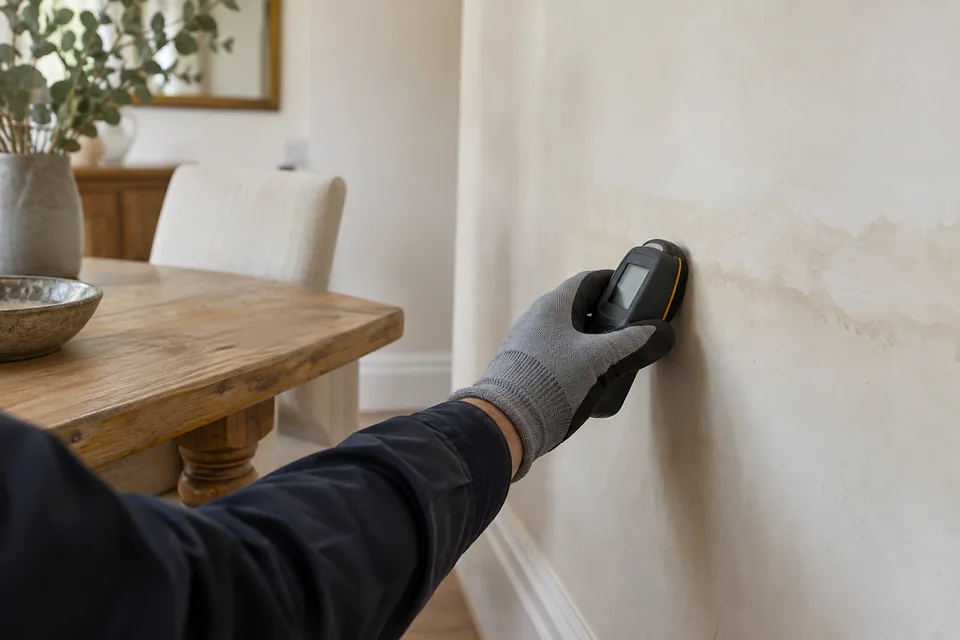
We identify the materials meeting within the work area
We inspect accessible wall, ceiling and floor condition, recording relevant moisture information and construction limits. The assessment distinguishes a damaged surface from adjoining retained material. A shared incident does not establish that each component needs the same intervention or has the same readiness requirement.
Further exposure or removal is accepted only with a defined purpose, extent and handling responsibility. We identify any unresolved junction or separately supplied technical work before closing the construction. The ordinary proposal does not certify hidden structures or assume every affected fitting is included.
We also identify where the reinstatement depends on information from another accepted activity. The proposal records that dependency without assigning the other provider’s technical conclusion to the ordinary interior team or treating an unfinished dependency as a completed surface.
We retain the material references through the sequence
We review drying progress with the relevant method, material and location. The accepted findings support the next decision without becoming a blanket approval for every later finish. A wall assessment and a floor assessment remain identifiable even where both form part of one reinstatement package.
Changes introduced during accepted preparation are considered before subsequent work is undertaken. We do not assume that a finding made before further material intervention describes the room unchanged afterwards. Any unresolved condition is reviewed with the relevant provider and selected treatment requirements.
We distinguish incident drying from later material stages
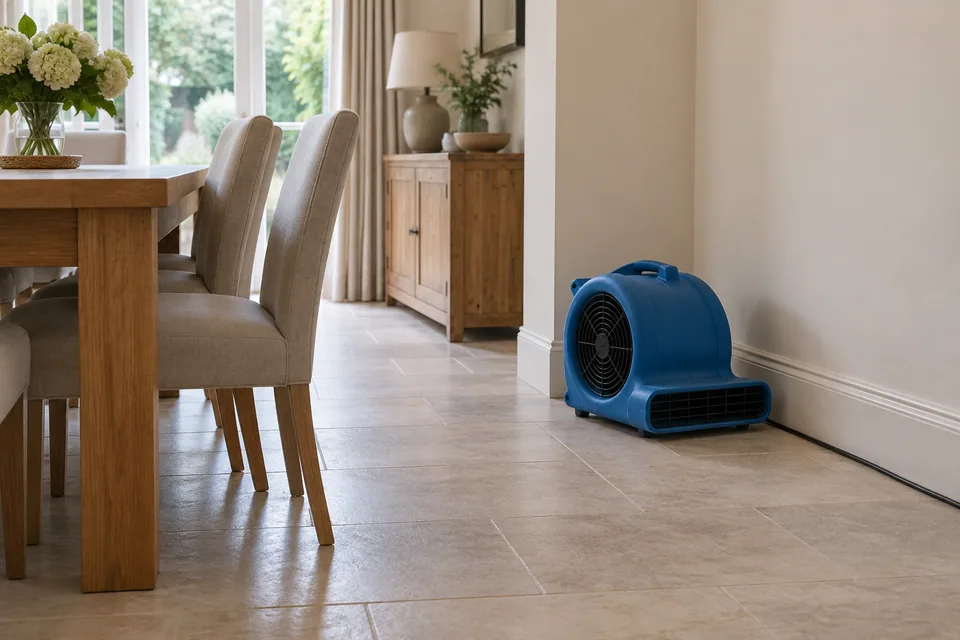
We select dehumidifiers and air movers for the assessed restoration task, identifying placement, access and operating responsibilities. Equipment follows the accepted arrangement and supplied instructions. The presence of machines does not automatically define the programme for every later plastering or flooring product.
Managed progress review and equipment-only hire remain separate services. We explain what the accepted drying appointment covers and how the next activity is reviewed. There is no universal period after which all surfaces in a connected interior are automatically ready for reinstatement.

Distinguishing stages after the incident
| Stage | What it addresses | Not automatic inclusion |
|---|---|---|
| Incident drying | Assessed water-affected materials | All later product stages |
| Material intervention | Accepted renewal or replacement | Every adjoining component |
| Preparation | Receiving condition for treatment | Final decorative work |
| Completion | Named reinstatement result | All separate provider actions |
We define the retained and renewed components
Plaster, timber and floor coverings are assessed individually for retention, suitable renewal or replacement. The accepted proposal identifies which components and faces change. A renewed wall background does not automatically replace the retained floor or perimeter detail beside it.
Where specialist material or contamination concerns arise, the appropriate responsible provider is identified before ordinary intervention proceeds. The restoration work does not promise identical replacement of unavailable products. Actual selected materials and their relevant requirements govern the reinstatement description.
Connected reinstatement activities
| Activity | Relevant interface | Defined decision |
|---|---|---|
| Plastering | Adjacent retained floor | Protection and accepted boundary |
| Floor preparation | Named receiving material | Selected covering requirement |
| Paintwork | New and retained backgrounds | Appointed finishing field |
| Perimeter work | Wall and floor meeting | Included component treatment |
Conditions we resolve before the next stage
Later preparation affects an accepted surface
We review protection and sequence before the next activity proceeds.
Different finishes need different receiving conditions
We identify the requirements by material rather than apply one room-wide stage label.
A retained component meets new work
We define the junction and included treatment before completion is reviewed.
Sequence information in the proposal
| Information | Purpose | Our approach |
|---|---|---|
| Retained finish | Avoid undefined later disturbance | Plan relevant protection |
| Selected product | Identify applicable requirements | Review next-stage readiness |
| Other provider | Clarify remaining dependency | Identify responsible action |
| Changed finding | Revise practical work | Explain before extension |
Restoration planning at the Notting Hill address
For Notting Hill enquiries around W11 and nearby W2, we confirm the exact address and affected interior. These outward districts are approximate and do not establish which practical arrangements apply at the premises.
RBKC publishes Notting Hill Carnival information. Where a delivery or visit coincides with relevant event arrangements, we check the current route separately from building access, rather than infer a fixed restriction or guarantee from the area name.

We coordinate preparation and finishes at their interfaces
We review the practical order of accepted plastering, floor preparation and decoration around the actual room. Newly completed work needs its agreed protection while another activity proceeds nearby. The sequence is explained before a later operation depends on a surface that has already been handed back.
We define the meeting lines between renewed and retained materials and review the appointed result at completion. Remaining technical work, product guidance and any outstanding action are recorded. A visually complete room is not presented as proof that every separate provider has completed its responsibility.
We identify the connected activities in the quotation
The proposal describes equipment, progress reviews, accepted intervention and the appointed finishes as distinct work. The practical order, retained components and junction requirements influence the accepted arrangement. We avoid an unexplained whole-room figure that conceals which surfaces and activities are included.
Where another finding or product decision changes the sequence, we explain the effect before extending the work. Access and observed readiness inform the programme. The quotation identifies the accepted result without promising that every trade activity can proceed simultaneously or that all retained material will become new.
The agreed sequence remains part of that accepted description.
Water damage restoration questions in Notting Hill
Does completing incident drying also complete the requirements of newly introduced plaster?
We distinguish the affected existing material from the new accepted preparation. Any newly introduced material has its relevant treatment requirements reviewed before the next finish proceeds.
Can wall reinstatement be described as renewing the adjacent retained floor edge?
We identify the actual components treated. A new wall background beside an existing floor does not by itself establish that the floor edge or covering was renewed.
Can a completed paint surface be used as the unprotected receiving area for a later accepted wet preparation task?
We coordinate the actual sequence and agreed protection. Completion of one surface does not establish that subsequent nearby work can proceed without considering its effect on that finish.
Does a drying-related floor opening decide the eventual plastering boundary on the wall?
We define each intervention for its actual purpose. An opening in one component is not automatically the reinstatement limit for a different material beside it.
Does a rise in room humidity after accepted wet plastering automatically establish another leak?
We review the actual material work and operating context alongside the relevant findings. Newly introduced moisture and a further incident are not diagnosed as the same event from a room-air change alone.
Does protection of a retained surface include renewing it at the end of the work?
We distinguish protection from appointed reinstatement. A retained surface does not become a newly treated component because it was covered while adjacent work proceeded.
Can an agreed reinstatement sequence be kept unchanged after a newly selected material requires a different order?
We review the accepted arrangement against the new material. The programme is not preserved by ignoring a relevant dependency introduced by the selection.
Can the later reinstatement contractor be recorded as having undertaken an earlier separate source intervention?
We distinguish the activities and the actual responsible providers. Completing the interior result does not transfer authorship of an earlier technical intervention to the provider carrying out the finishes.
Related property services
Coordinate the finishes your Notting Hill restoration needs
Tell us which surfaces require reinstatement and which will remain. We will assess the construction and define drying, preparation and the connected finishing sequence.