

Room stages · Defined handover
Water Damage Restoration in Kingston upon Thames
We assess water-affected Kingston upon Thames interiors, plan drying and agree room-specific reinstatement stages with a clear record of completed and outstanding work.
- Room stages identified against actual material condition
- Partial completion distinguished from whole appointment
- Accepted surfaces and outstanding actions recorded
Affected areas assessed
Drying arrangement defined
Changes explained before work
Interior scope agreed
We define the room stages before calling the work complete
We assess Kingston upon Thames properties where several interior activities may be completed at different points. The proposal identifies the affected rooms, drying provision and appointed reinstatement fields. We distinguish progress in one area from completion of the whole package, giving the authorised contact a practical record of what can proceed and what still depends on another condition or instruction.
We organise the proposal around named room activities so progress can be understood without a misleading all-or-nothing completion label. The accepted assessment, equipment stage and interior fields can each have a different status. We explain the dependencies between them and identify who authorises the next activity. This helps the client distinguish a practical completed stage from an unresolved condition, an excluded area or a separately requested later appointment.
We establish safety separately from progress terminology
We ask about the incident, continuing water entry and affected supplies before ordinary assessment proceeds. An area described as cleaned, emptied or nearly finished is not automatically safe to enter. Appropriate utilities, unsafe construction and suspected contamination require their responsible providers. We do not use a programme milestone as a substitute for a necessary safety assessment.
We record progress by the actual room activity
Identify the rooms and appointed stages
We establish the incident, safe access and the areas included in the proposed assessment and restoration.
Assess material and access boundaries
We inspect accessible surfaces and record the limits that affect the response in each named room.
Agree drying and the review sequence
We define equipment and operating responsibilities alongside the proposed order of material decisions.
Accept the next interior field
We review the relevant condition and chosen finish requirements before authorising the appointed preparation or installation stage.
Record completion and outstanding actions
We review the actual accepted work, distinguish partial completion and explain any remaining dependency or separate appointment.

We identify the scope of each room assessment
We inspect accessible wall, floor and ceiling changes and record the boundaries between the named rooms. Any inaccessible or excluded surface remains identifiable. We do not describe one completed room inspection as assessment of every connected area, or treat an overall property heading as a substitute for the actual material and access record.
The room descriptions identify the actual accessible field and any surfaces outside the current review. We keep that boundary visible when the appointment covers more than one area. A property-wide title does not replace the record of what was inspected or reveal concealed construction. If another section needs access or further information, we explain that requirement before treating the relevant interior stage as ready to proceed.
We review the condition needed for the next named stage
We consider relevant material findings and the accepted operating history before advancing a room. Different surfaces can require different decisions even where they belong to one appointment. Conditional air information supports the agreed review without replacing the material assessment. A completed review visit is not itself a statement that all subsequent interior stages have been accepted.
We review the information needed for the named next activity rather than infer readiness from the order in which tasks appear in a programme. A floor installation and a wall coating can depend on different material requirements. The accepted review records those distinctions alongside relevant operating conditions. Completing a visit does not itself authorise every following activity or establish that all appointed surfaces have reached the same condition.
We coordinate the drying task with the proposed room sequence
We define appropriate equipment and operating responsibilities for the assessed affected areas. A proposal to remove or reposition a unit as one room progresses is reviewed against the remaining task. We do not assume a finished surface in one area makes the whole equipment arrangement unnecessary. Source and safety responsibilities remain separately established throughout the ordinary appointment.
The proposed equipment arrangement remains linked to the affected task as rooms progress. A request to remove or move a unit is considered against the material still being assessed and the responsibilities accepted for the remaining area. We record the practical change rather than assume one completed surface ends the whole provision. That review does not promise a fixed drying period or a general safety clearance for the property.

Equipment and the remaining work
| Provision | Purpose | Review boundary |
|---|---|---|
| Dehumidifier | Air-moisture removal | Remaining accepted task |
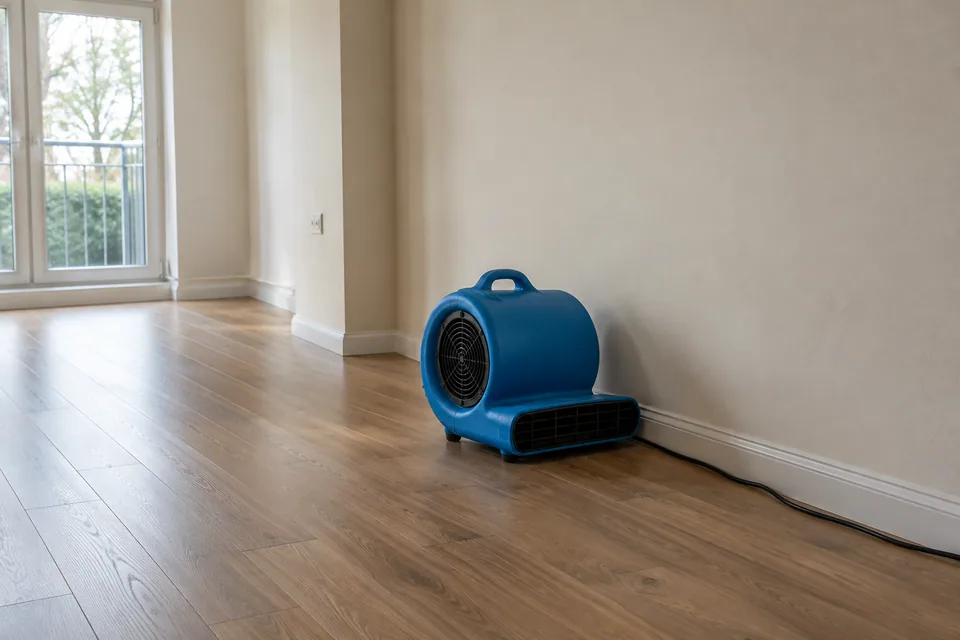
| Air mover | Accessible circulation | Placement changes assessed |
| Material review | Next-stage information | Actual named surface |
| Completion record | Identify work done | No unrelated certification |
We distinguish remaining fabric from completed finishes
We assess the actual materials and the requirements of the selected next surface. A completed painted wall and an outstanding floor layer can exist within the same room, so the completion record needs to identify the appointed activities. We keep any structural, utility or specialist contamination responsibility separate from acceptance of ordinary interior finishes.
Room stages and their meaning
| Status | What it describes | What it does not establish |
|---|---|---|
| Assessed | Accepted accessible review | All hidden construction |
| Drying reviewed | Relevant progress information | All finishes complete |
| Surface reinstated | Appointed material activity | Every room activity |
| Handover recorded | Actual completed scope | Unrestricted property clearance |
One completion label can hide different room conditions
Walls finish before flooring
We record the separate activity status instead of describing the whole room as fully reinstated.
An excluded room remains affected
We keep its boundary clear so completion of the appointed field is not read as a property-wide assessment.
A later stage remains provisional
We identify the outstanding decision before treating its supply or work as authorised.
Stage findings and next decisions
| Finding | Relevant distinction | Next action |
|---|---|---|
| Paintwork complete | Flooring still appointed | Record separate status |
| Unit relocation proposed | Remaining material task | Review equipment plan |
| Uninspected area | Different access field | Explain limit |
| Later product undecided | Provisional stage | Confirm before instruction |
Kingston upon Thames address and restoration access
For Kingston upon Thames enquiries around KT1 and KT2, we confirm the whole address, affected rooms and working entrance. These outward districts are approximate locators rather than exact neighbourhood or parking boundaries.
Kingston’s parking service provides road-zone information and different permit categories, including contractor arrangements. We check the relevant current process for equipment and finishing visits without promising a reserved space. The vehicle arrangement is separate from the agreed room stages and permission to use private access.

We hand over the work actually completed
The accepted package can include suitable plastering, flooring, preparation and paintwork. We review the appointed surfaces and explain remaining actions, exclusions and relevant product guidance. Partial completion is described by its actual field rather than as an unrestricted clearance of the room. The record distinguishes an excluded activity from one still included but awaiting its appropriate next stage.
We quote stages without implying unlimited completion
The quotation identifies assessment, drying, reviews and the interior work accepted in each field. Where one activity remains provisional, we show its status rather than present the whole room as fully specified. We explain changes and obtain the relevant instruction before extending the appointment, keeping completed work and any separately requested later package distinct. The stage descriptions remain attached to the rooms they concern.
Water damage restoration questions in Kingston upon Thames
Can a room be listed as fully reinstated when an included floor activity is still outstanding?
We describe the actual completed activities and remaining work. Finished walls do not by themselves establish completion of the appointed floor stage.
Does an excluded room become an outstanding item in the accepted contract merely because it remains affected?
We distinguish exclusions from included work not yet completed. A separate affected area does not become commissioned solely through its condition at handover.
Can the phrase “drying reviewed” be used as confirmation that the decorative stages are complete?
No. We keep progress review and completed interior work distinct, so the record describes the actual appointed stage rather than a later activity.
Will removal of one unit automatically end equipment responsibilities for every room?
We review the remaining accepted task and arrangement. A room-specific equipment change does not by itself close the provision elsewhere in the property.
Can a provisional later stage be recorded as accepted because earlier work has been paid for?
We identify the instruction for that stage separately. Payment relating to completed work does not silently authorise an unresolved supply or scope decision.
Does a completion photograph identify every area excluded from the appointment?
We use the agreed written scope and relevant record. An image of a finished surface is not a substitute for identifying excluded or uninspected fields.
Will separately completed rooms be recorded with one assumed completion date for every activity?
We identify the actual stage and completion information relevant to the appointed work. A general property date is not substituted for the status of distinct room activities completed at different points.
Will a handover for one room automatically start a new appointment in the next room?
We agree the next scope and authority expressly. A completed stage provides context but is not itself an instruction for additional restoration elsewhere.
Related property services
Define the room stages and handover
Give us the Kingston upon Thames address and the affected rooms. We will identify the assessment, accepted drying and reinstatement activities and how their completion is recorded.