
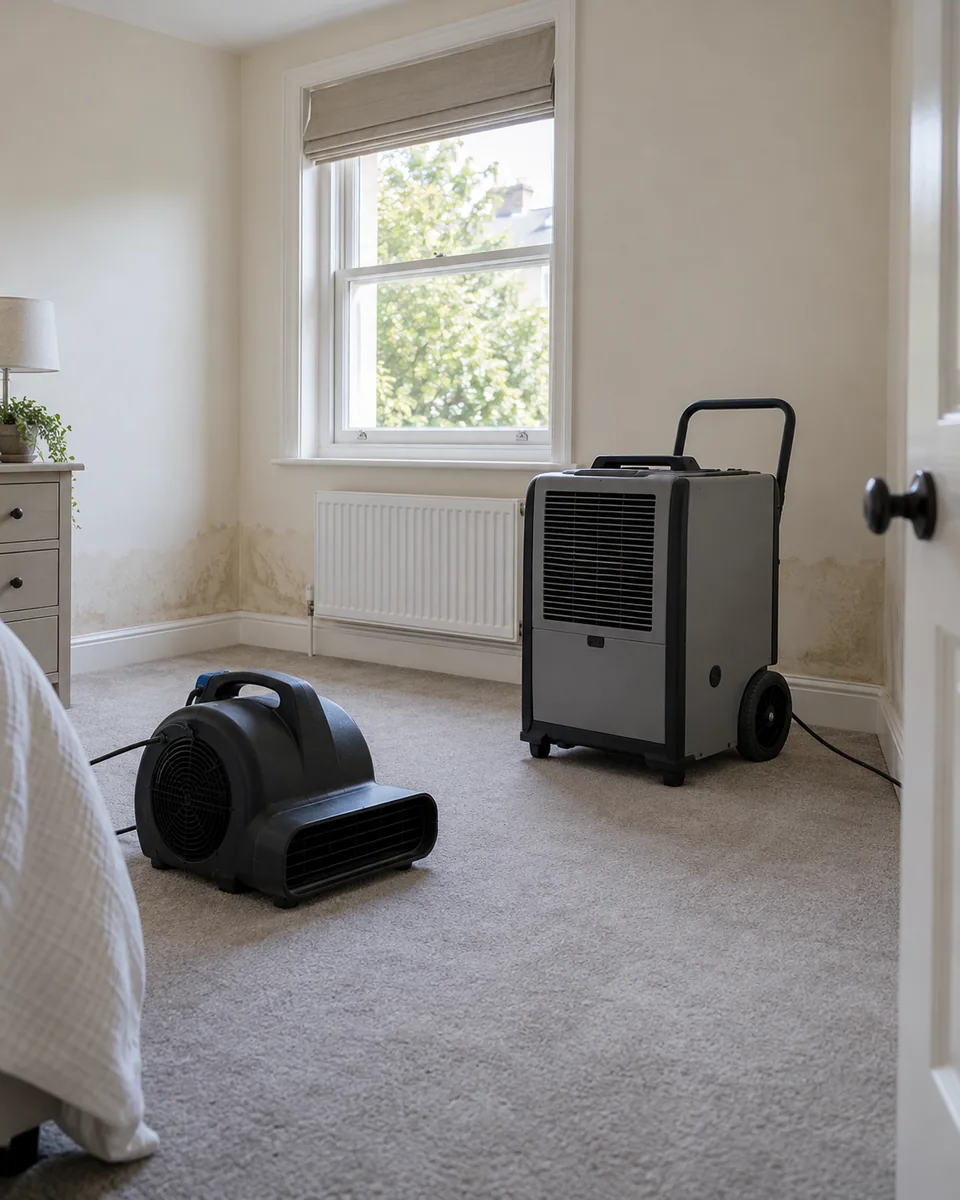
Affected timber · Material decisions
Water Damage Restoration in Kensington
We assess water-affected timber and adjoining finishes in Kensington, defining monitored drying and suitable interior reinstatement from the actual material condition.
- We identify surface, edge and background findings
- We define drying around the assessed material setting
- We agree the finish after the retention decision
Affected construction assessed
Source responsibilities identified
Drying response reviewed
Accepted finishes reinstated
We assess the timber before promising its recovery
Water can change a timber surface without producing the same result in the coating, the wood and adjoining materials. We distinguish those observations before proposing restoration. Our retention decision follows the actual component condition, rather than the expectation that all changes will reverse once equipment has run.
Our Kensington work combines accessible assessment, appropriate dehumidification and air movement, progress review and the appointed interior reinstatement. We discuss suitable renewal or replacement alongside surrounding finishes. Structural concerns and specialist technical responsibilities remain separately identified, with no blanket promise to restore every timber item.
We establish safe access around the affected components
We ask about continuing water entry and any affected electrical equipment, loose material or unsafe floor condition. The appropriate safety assessment takes priority where required. We do not ask occupants to operate wet fittings, lift unstable construction or move an affected built-in item to obtain a better view.
Available photographs and product information help identify the component when gathered safely. We distinguish a report of water contact from a complete description of the material. A similar timber appearance can belong to solid wood, a veneered product or a different manufactured construction.
Our assessed restoration sequence
Identify the timber setting
We establish safe access, source information and the affected component locations before defining the ordinary interior appointment.
Assess material and finish
We inspect accessible construction and surface changes, keeping concealed faces and structural responsibilities outside an unsupported conclusion.
Set the drying arrangement
We identify equipment roles, accessible areas and operating responsibilities suitable for the accepted task.
Review retention and readiness
We consider moisture information and physical condition separately before agreeing renewal, replacement or further assessment.
Complete the accepted finishes
We reinstate appointed components and adjacent surfaces, then record the result and retained conditions at handover.
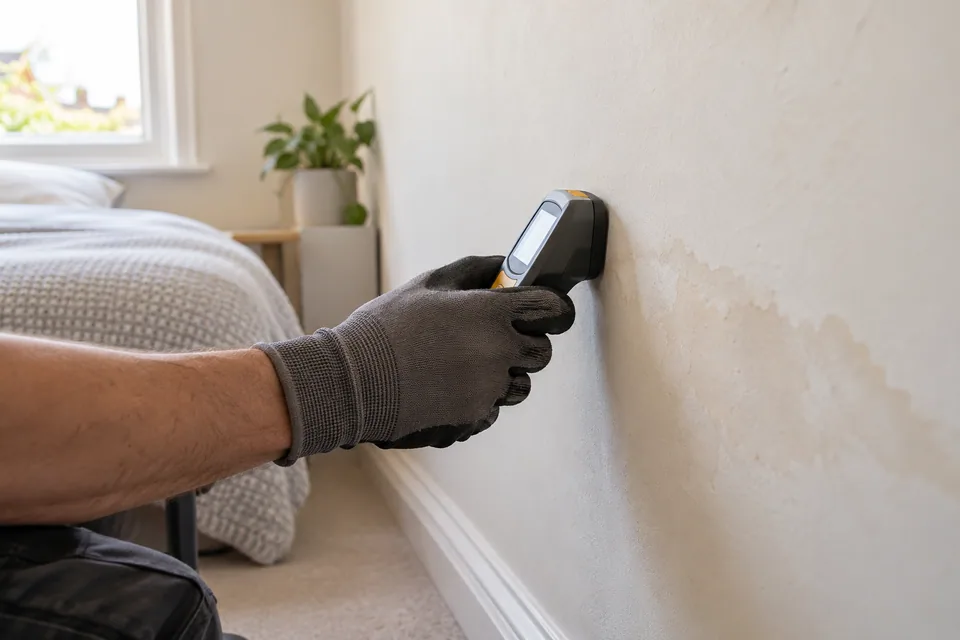
We identify surface, edge and background findings
We inspect accessible changes in colour, coating adhesion, swelling and distortion. The observation is attached to its location and the construction we can identify. An affected face does not establish the condition of a concealed back or adjoining receiving material.
Where a component cannot be fully assessed in place, we record the access limit and discuss any accepted further intervention. Removal, exposure and disposal are defined before disturbance. We do not describe an ordinary interior survey as confirmation of hidden structural adequacy or specialist conservation treatment.
We also distinguish a loose surface layer from a missing piece of the component. That distinction helps define the accepted intervention and prevents a decorative description from becoming an assumption about material replacement.
We review moisture and physical condition separately
Accessible moisture information helps review drying progress, but physical changes need their own assessment. We do not record a component as recovered solely because a relevant moisture indication has improved. Coating condition, shape and the proposed use remain part of the decision.
Comparisons retain the material, method and location references. Where several timber or sheet materials occur together, the findings are not averaged into one assumed condition. We review changes against the accepted operating arrangement and identify any further question before the next finish is applied.
We define drying around the assessed material setting
We select equipment for the accessible affected areas, considering circulation, placement and the supplied instructions. Dehumidifiers remove water vapour from air, while air movers support circulation and evaporation. Their roles do not establish that every concealed timber face receives the same drying response.
The proposal identifies operating and progress-review responsibilities. A hired machine does not automatically commission removal of a fitted component or subsequent treatment. Changes in placement or access are reviewed where they affect the accepted arrangement, without assigning a universal duration for timber recovery.
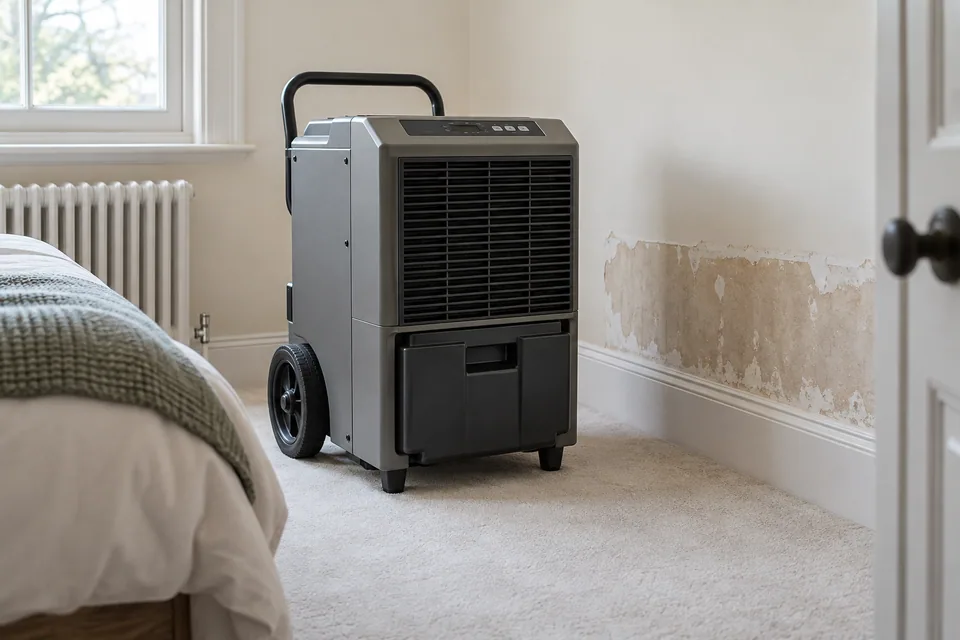
Restoration activities kept distinct
| Activity | Accepted purpose | Not automatic evidence of |
|---|---|---|
| Drying | Address assessed moisture condition | Reversed physical change |
| Surface preparation | Prepare accepted material | Renewed concealed construction |
| Replacement | Renew named component | Complete surrounding treatment |
| Finishing | Complete selected appearance | Universal removal of every mark |
We distinguish timber construction from its appearance
Solid timber, veneered components and manufactured boards can require different retention decisions. We review the actual product and accessible condition rather than name the material from colour alone. An intact coating does not establish the condition of the construction beneath it.
We consider whether suitable renewal remains practicable within the accepted interior work. An affected component may need replacement even where some surfaces can be retained. Any specialist concern or hazardous material issue is referred to its appropriate responsible provider before ordinary preparation is accepted.
Timber-related findings and their meaning
| Finding | Separate question | Next decision |
|---|---|---|
| Changed colour | Material or coating observation | Assess actual construction |
| Swelling | Physical component condition | Review retention suitability |
| Loose finish | Attachment to receiving material | Define accepted preparation |
| Concealed back | Unexamined surface | Identify access requirement |
Conditions we resolve before the next stage
A coating remains intact over changed material
We review the component rather than assume that an unbroken decorative film proves recovery.
Only one face is accessible
We identify the inspection limit and any accepted further access needed before the material decision.
The proposed finish cannot hide the condition
We revisit the material response rather than extend decoration over an unresolved component concern.
Information for the quotation
| Reference | Why it matters | How we record it |
|---|---|---|
| Component identity | Different constructions behave differently | Known product and access limits |
| Affected faces | Visible and concealed areas differ | Appointed intervention extent |
| Retained surroundings | Junctions influence finishing | Named adjacent surfaces |
| Further findings | Retention proposal can change | Revised work before acceptance |
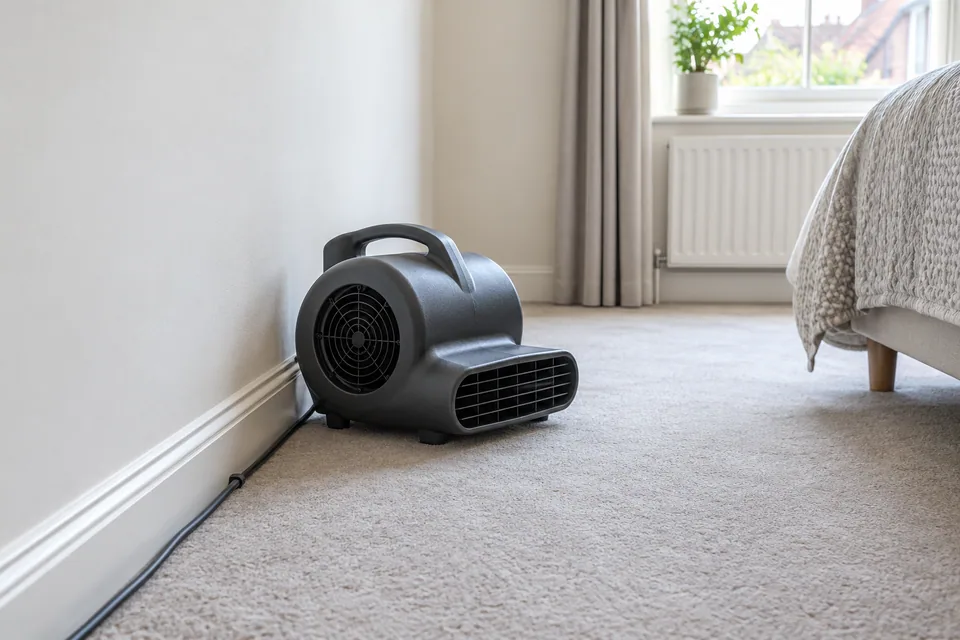
Restoration planning at the Kensington address
For Kensington enquiries around W8, we confirm the actual address and timber setting. The outward district is approximate; access, retained features and the affected rooms are reviewed for the individual property.
RBKC publishes listed-building and conservation-area guidance. Where the proposed intervention affects a relevant protected feature, we identify the address-specific requirement before disturbance, keeping ordinary interior restoration separate from any specialist or consent responsibility.
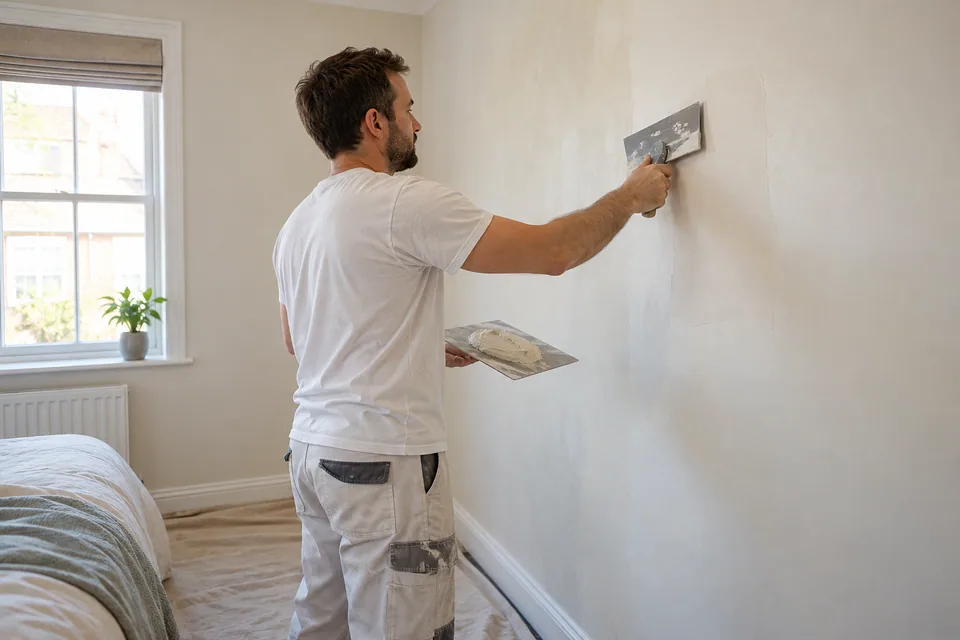
We agree the finish after the retention decision
We define the appointed timber renewal or replacement and adjoining plastering, preparation or paintwork after reviewing readiness. A proposed decorative treatment must suit the accepted receiving material. It is not used to conceal an unresolved change in the component itself.
The agreed result distinguishes retained timber variation from new treatment. We identify which component faces and surrounding surfaces are included, then review the accepted work at completion. No generic clear or opaque finish is described as a guarantee that every earlier water mark will disappear.
We price the response to the actual timber condition
The quotation separates assessment, equipment drying and accepted material intervention from the finishing field. Component access, construction and the surrounding retained finishes affect the work differently. The visible area of a mark does not describe every operation needed to complete the appointment.
If further access changes the retention decision, we explain the findings and revised proposal before proceeding. Product selection and observed condition influence the sequence. We identify provisional matters rather than promise that every water-affected timber item will receive the same treatment at a fixed cost.
Water damage restoration questions in Kensington
Does a whitened timber coating establish that wood fibres have been lost beneath it?
We distinguish the changed surface appearance from actual missing material. The accessible coating and timber condition are assessed separately rather than diagnosing fibre loss from the colour change alone.
Can an intact varnish film establish the condition of the timber beneath it?
We review the accessible construction and source history. A continuous decorative film is one observation, not a complete assessment of the material behind it or an assurance that no further access is needed.
Does a water-darkened timber face automatically require an opaque replacement finish?
We assess the material and accepted appearance before selecting treatment. A darker area does not by itself decide between retention, renewal, replacement or a particular decorative finish.
Can darkening at an exposed timber end show the full depth of wetting inside the component?
We distinguish the visible colour change from the material assessment. An end-face mark alone does not measure moisture through the component or establish the condition of its concealed interior.
Does drying a fitted timber element automatically include taking it out of its installed position?
Removal is a separate agreed intervention. We define its need, extent and responsibility before disturbance rather than treat equipment drying as permission to dismantle retained interiors.
Can an existing timber label remain the restoration reference after a different replacement component is accepted?
We record the actual accepted replacement separately from the retained item. The earlier component information does not silently become the material description or treatment basis for the new supply.
Will accepting one timber face for retention establish every face of that item?
We record the accessible condition and limits. An accepted exposed face does not establish the condition of the concealed back, edges or adjoining construction without relevant assessment.
Can a decorative treatment be used as the decision that a distorted component is fit to remain?
We decide the material response first. A selected finish does not substitute for assessing the physical change, and unresolved suitability needs review before reinstatement proceeds.
Related property services
Discuss the affected timber and surrounding finishes
Tell us which Kensington components changed after wetting. We will assess accessible condition and define drying, material decisions and the accepted interior result.