

Retained finishes · Assessed reinstatement
Water Damage Restoration in Chelsea
We assess water-affected Chelsea interiors, considering retained decorative finishes alongside monitored drying, material decisions and the appointed reinstatement field.
- We distinguish the visible decoration from its background
- We arrange equipment around the accepted interior setting
- We agree a workable boundary for the new finish
Affected construction assessed
Source responsibilities identified
Drying response reviewed
Accepted finishes reinstated
We plan restoration around the finishes that remain
A water incident can affect a small decorative area while leaving the surrounding room important to the finished result. We assess that affected construction before deciding what can remain. Our reinstatement proposal names the retained and renewed areas, rather than promise that a local intervention will disappear within an aged finish.
Our Chelsea service combines accessible moisture assessment, appropriate drying arrangements and accepted interior work. Plastering, flooring preparation and paintwork are included where assessed and agreed. The response is based on the actual material and condition, with source control and specialist responsibilities identified separately.
We establish access without disturbing fragile finishes
We discuss continuing water entry, electrical concerns and loose ceiling or wall material before an ordinary restoration visit proceeds. Safe entry must be established by the relevant responsible party where needed. Decorative value does not justify entering an unsafe area or handling wet electrical fittings.
Photographs and previous finish information can help the assessment when available without risk. We ask which surfaces the household wishes to retain, but do not treat that preference as proof of sound condition. Any disturbance needed for assessment is explained before the accepted opening or removal begins.
Our assessed restoration sequence
Identify retained priorities
We discuss the incident, safe access and the surfaces proposed for retention, keeping preference separate from material condition.
Assess finish and background
We record accessible damage, relevant moisture information and the limits created by retained details or closed construction.
Agree drying and review roles
We define equipment placement, operating responsibilities and the locations available for progress review within the accepted interior setting.
Set the reinstatement field
We review readiness and agree the preparation and decorative boundary, including any extension beyond the originally visible mark.
Complete and explain the result
We finish the appointed areas and distinguish the new treatment from retained variation and any separately outstanding specialist responsibility.

We distinguish the visible decoration from its background
We inspect accessible staining, adhesion changes, softened areas and junctions around decorative details. The assessment records the finish face and the material receiving it separately. A familiar pattern or paint colour does not establish the construction beneath it or the extent of moisture spread.
Where retained mouldings or detailed surfaces restrict access, we identify that limit rather than imply a complete inspection. Ordinary interior work is separated from structural concerns, specialist contamination and any specialist conservation treatment. These responsibilities need an appropriate confirmed provider before their outcome is relied upon.
We relate drying progress to the retained material
We review accessible moisture information and condition against identified locations. The same visible decorative feature can cover several materials, so we do not treat its appearance as one uniform measurement surface. Method and material remain part of the comparison.
Progress reviews consider the accepted equipment arrangement and available access. Where further inspection would disturb a finish proposed for retention, we discuss that decision rather than hide the access limit. An improvement in an exposed area does not certify a concealed background as ready for every new coating.
We arrange equipment around the accepted interior setting
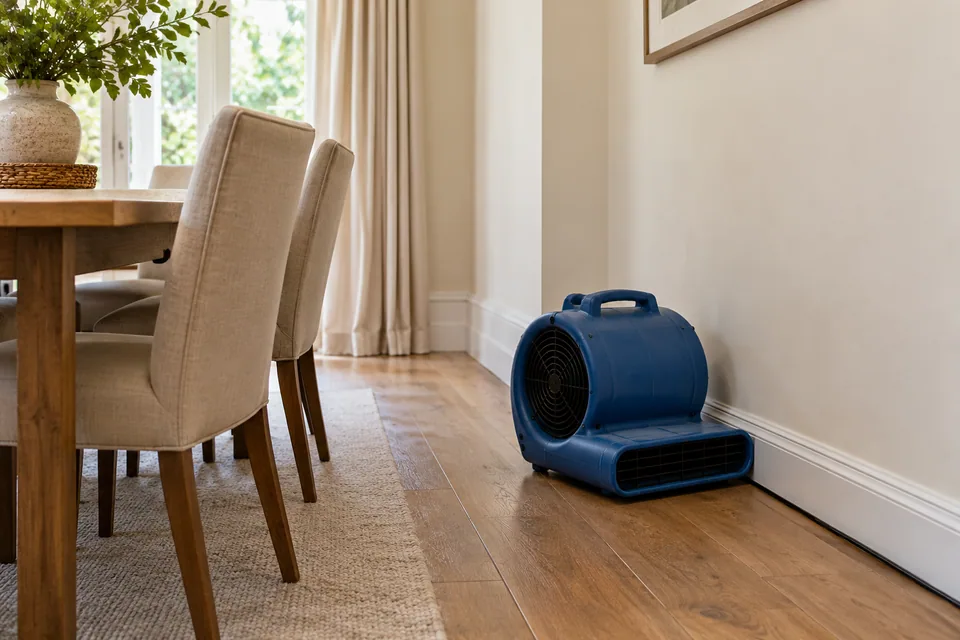
We select dehumidifiers and air movers for the assessed drying task and review clear routes and placement. Air movement and water-vapour removal serve different roles. The equipment arrangement follows the space and relevant instructions rather than an assumption that more airflow is always the correct response.
We identify operating and review responsibilities, including changes that might affect retained surfaces or room access. Hire-only equipment does not include the full restoration package by implication. The programme follows actual findings, not a fixed drying period attached to the decorative room description.

Defining the accepted finish field
| Reference | What it describes | What it does not establish |
|---|---|---|
| Damage mark | Visible affected face | Complete intervention quantity |
| Retained surface | Area remaining in place | Uniform original condition |
| New finish sample | Accepted replacement reference | Invisible aged-surface match |
| Room boundary | Possible finishing extent | Automatic inclusion of every face |
We assess retention before defining replacement finishes
Plaster, plasterboard, timber details and applied finishes can respond differently to wetting. We inspect accessible condition and distinguish loss of adhesion, softening and appearance changes. Drying alone is not a promise that a delicate decorative surface will return to its earlier shape or bond.
Accepted material removal is defined by location and extent, with waste arrangements identified. Where the construction or finish requires specialist treatment, we record the appropriate boundary. We do not describe ordinary preparation as manufacture of a historic replacement or specialist conservation work without confirmation.
Retained detail and its assessment
| Detail | Separate consideration | Decision |
|---|---|---|
| Painted moulding | Background and adhesion | Retention or agreed intervention |
| Decorative plaster | Accessible material condition | Ordinary work or separate specialist role |
| Aged paint field | Existing variation | Accepted reinstatement boundary |
| Applied finish | Actual construction beneath | Access limits recorded |
Conditions we resolve before the next stage
A valued finish is loose
We assess condition and safe access before accepting retention as the response.
The affected background is smaller than the decorative field
We explain the proposed finishing extent and obtain agreement before it is enlarged.
An exact old finish is unidentified
We review the accepted replacement reference without promising an undocumented recreation.
Stage decisions before completion
| Stage | Information reviewed | Accepted next action |
|---|---|---|
| Assessment | Safe access and material findings | Define affected construction |
| Drying | Relevant progress observations | Review available condition |
| Preparation | Receiving-surface requirement | Agree local treatment |
| Handover | Completed field and retained variation | Record remaining matters |
Restoration planning at the Chelsea address
Chelsea enquiries commonly reference SW3, used here as an approximate outward district. We confirm the exact premises, affected finishes and equipment route rather than infer the building arrangements from the postcode.
RBKC provides guidance on listed buildings and conservation areas. Where designation or a protected feature may affect the proposed intervention, we identify the address-specific requirement before disturbance; a restoration appointment does not itself establish permission.
We agree a workable boundary for the new finish
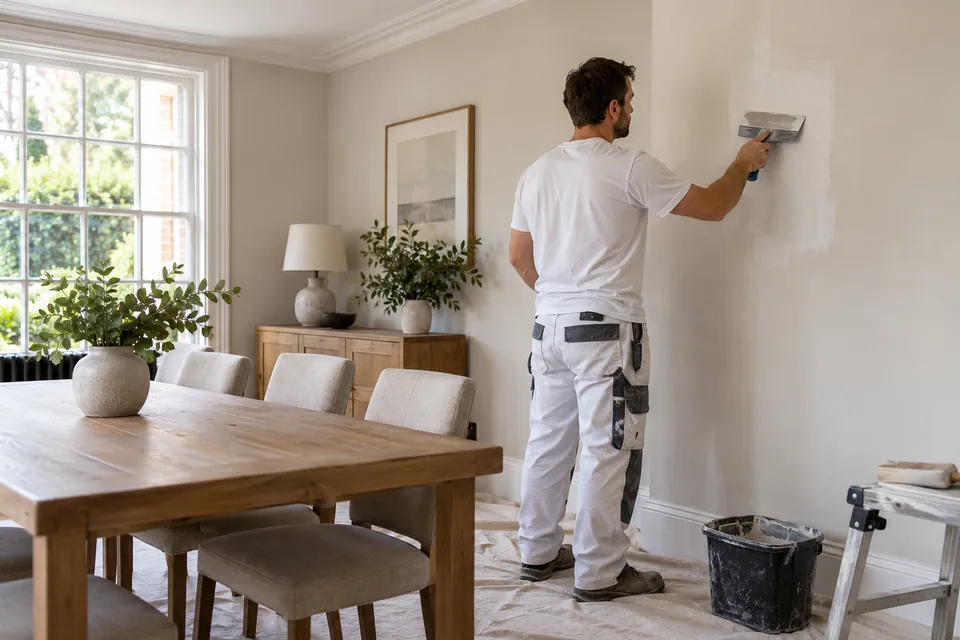
We define preparation and reinstatement after reviewing material condition and the selected finish requirements. A small affected background can lead to a different decorative field, but that extension is agreed rather than assumed. The proposal names what will be renewed and what remains alongside it.
We review the accepted result against that field, distinguishing newly completed work from retained age, texture and earlier variation. Handover includes outstanding decisions and relevant product guidance. It does not promise an invisible match between new work and every existing decorative surface.
We separate material intervention from decorative extent
The quotation identifies accepted assessment, equipment, review visits and any material opening or removal. Reinstatement is described by the appointed surfaces and finish treatment, so the work can be understood independently of the size of the original visible mark.
Retained detail, restricted access and product availability can affect the accepted proposal. We explain new findings and changes before extending the work. A preference to retain more decoration may alter the practical assessment or intervention, and we discuss that consequence before proceeding.
Water damage restoration questions in Chelsea
Can a decorative moulding be marked retained before its attachment is assessed?
We record the retention preference, then review accessible condition. A wish to keep the detail is not evidence that its attachment remains suitable after wetting, and any unresolved concern needs the appropriate assessment.
Does retaining an old paint finish also mean its underlying plaster has been accepted unchanged?
No. We distinguish the decorative face from the material receiving it. The proposal identifies which layers can be assessed and what remains concealed before any retention decision is relied upon.
Can an ornamental pattern be used as the sole boundary for removing affected material?
We assess material condition separately from the visual repeat. The accepted intervention cannot be defined solely to preserve a pattern if that would leave an unresolved affected background.
Will a local reinstatement automatically include reproducing a discontinued decorative treatment?
We identify the actual proposed treatment and its provider. Ordinary interior reinstatement is not described as specialist reproduction; an unavailable or specialist finish needs a separately accepted decision.
Can a retained historic-looking feature be treated as proof that consent is unnecessary?
We check the actual property and proposed work against the relevant requirements. Appearance alone does not establish designation, consent or permission to disturb a particular feature.
Can the finishing boundary be agreed after the preparation has already crossed it?
We define the accepted field before extending the work. If findings require a different boundary, we explain the reason and revised proposal rather than allow the intervention to establish its own authorisation.
Does accepting new plaster texture confirm an invisible match to the retained decoration?
We distinguish the accepted preparation from the agreed visual result. New and retained materials can present differently, so the finishing proposal records the actual field and reference rather than promise universal invisibility.
Can a loosened decorative fragment be discarded before the retention decision has been agreed?
We identify the accepted handling and material decision before disposal. Where safe and appropriate, the relevant fragment can help describe the affected detail; removal of unsafe material and any specialist responsibility remain separately established.
Related property services
Discuss restoration around retained Chelsea finishes
Describe the affected room and any decoration you hope to keep. We will assess the available construction and define drying, intervention and reinstatement boundaries.