
Apartment fabric · Building interfaces
Water Damage Restoration in Canary Wharf
We assess water-affected Canary Wharf apartments, define drying within the appointed property and coordinate reinstatement around confirmed building responsibilities.
- Apartment and shared construction distinguished
- Building contacts and intervention limits identified
- Accepted interior stages recorded at handover
Affected areas assessed
Drying arrangement defined
Changes explained before work
Interior scope agreed
We define the apartment appointment before work begins
We assess affected interiors in an existing Canary Wharf property and identify how the proposed restoration meets the building around it. The apartment address, affected surfaces and authorised contact are confirmed together. We distinguish the private interior package from any shared construction, neighbouring property or building-controlled service that needs another instruction.
We identify the information that belongs to the apartment appointment and the information expected from the responsible building contact. Those records may relate to one event while covering different areas. We use them to establish a practical sequence without presenting a private instruction as a building-wide contract. The accepted proposal states which interior surfaces and activities we can address and which interface still requires confirmation from another responsible party.
We identify the responsible access and safety contacts
We arrange the ordinary assessment only around safe entry and appropriate source and utility responsibilities. A concierge or building contact may help establish access, but their availability does not prove affected electrical installations or concealed construction are safe. We use incident information obtainable without risk and identify specialist concerns before proposing ordinary equipment operation or finishing.
Our apartment and building interface sequence
Identify the property and instruction
We establish the apartment reference, incident history, authorised contact and safety dependencies before ordinary restoration is arranged.
Inspect the accessible interior
We record affected finishes and distinguish private access from risers, shared fabric or neighbouring property requiring another arrangement.
Define the interior drying package
We agree equipment, operation and review within the confirmed rooms and any supplied building restrictions.
Resolve reinstatement interfaces
We identify the information and material condition required where the accepted interior meets another party’s responsibility.
Hand over the appointed property work
We review completed surfaces and list remaining interfaces without treating our apartment record as a building-wide clearance.
We record where private access reaches its limit
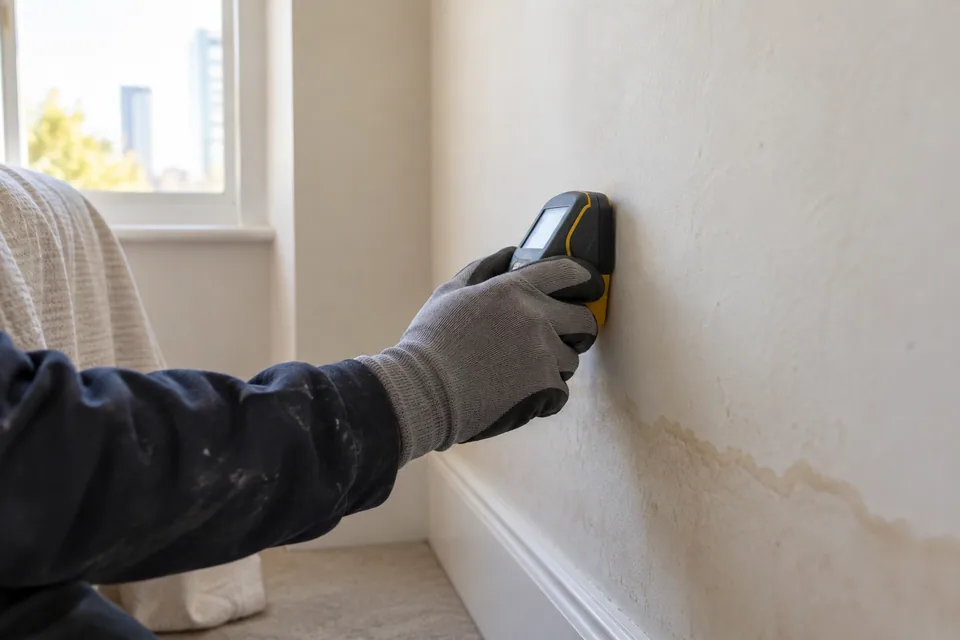
We inspect the available rooms and record where a riser, communal surface or controlled enclosure prevents further assessment. The proposal identifies that boundary rather than describing the inaccessible area as inspected. Where water may have crossed a property interface, we explain the additional information or responsible access needed before settling the affected interior response.
Our inspection record distinguishes entry to a room from access to the construction beyond its finish. A controlled enclosure, adjoining property or shared service may prevent a complete view. We explain the consequence for the interior proposal and identify the relevant next contact. We do not mark a restricted area as assessed simply because the building is accessible or because someone has supplied a general account of the incident.
We keep observations attached to the relevant property
We review the accessible material findings within the area actually assessed. An observation supplied by the building contact can support the history without becoming a reading taken inside the apartment. We distinguish sources of information so the review does not imply we have inspected every shared layer or verified work completed by another appointed party.
We consider each available finding within its stated area. A building report may describe a shared event, while our accepted review concerns particular materials in the apartment. Keeping those sources identifiable avoids overstating what the interior appointment establishes. Where further information affects the next finish, we identify it before closing the appointed surface rather than substitute a general building notice for the required material decision.
We arrange equipment within confirmed building conditions
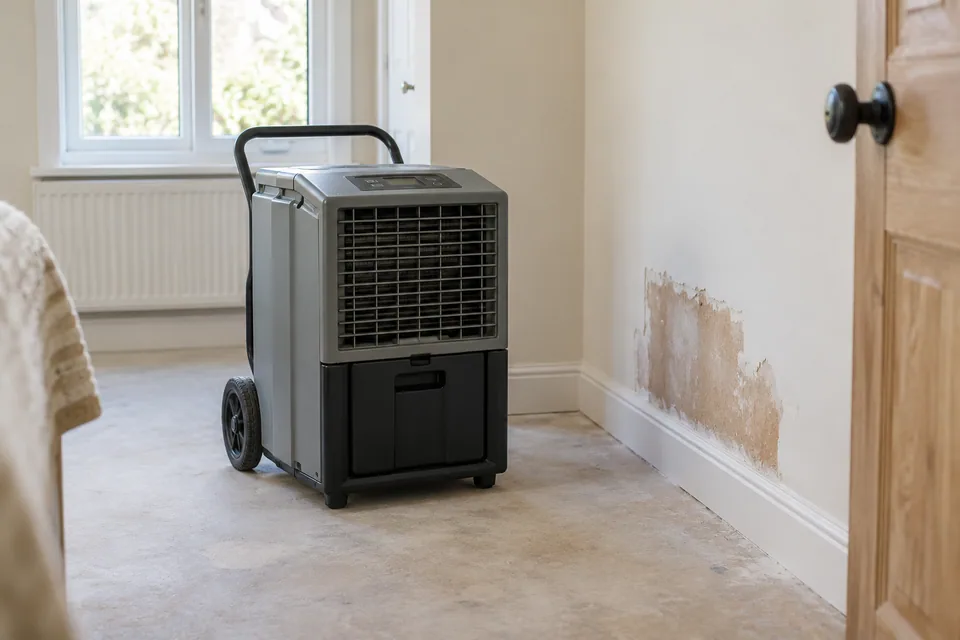
We define the appropriate dehumidifier and air-movement proposal for the agreed interior task. Equipment positioning, operating responsibility and practical access are recorded against the actual room. We identify any building-provided restriction affecting the arrangement without assuming a private room instruction permits connections, storage or intervention in a shared service enclosure.
We agree practical equipment access within the property and any building conditions supplied for the task. That includes the space available for the accepted units and later review. It does not automatically include use of a communal supply, service cupboard or storage position. Where the proposed arrangement cannot operate within the confirmed boundary, we explain the required coordination before accepting a changed setup or treating the drying appointment as ready.
Equipment and building interfaces
| Provision | Purpose | Limit |
|---|---|---|
| Dehumidifier | Air-moisture collection | Confirmed room and supply |
| Air mover | Circulation | Accepted placement |
| Material observation | Review accessible condition | Identified property location |
| Building record | Support incident history | Not our own inspection |
We separate internal finishes from shared construction
Affected paintwork, plaster, flooring and skirting are considered against the available construction information. A continuous decorative appearance does not establish that every layer belongs to the same appointment. We identify the accepted interior materials and any uncertainty about the backing construction, keeping structural, utility and specialist contamination decisions with their appropriately confirmed responsible providers.
Property boundaries in the proposal
| Area | Relevant question | Recorded limit |
|---|---|---|
| Private interior | Which finishes are appointed? | Accepted room scope |
| Controlled riser | Who provides access? | Separate responsibility |
| Shared ceiling layer | What information is available? | No assumed inspection |
| Adjoining apartment | Is access authorised? | Distinct appointment |
Boundaries that change an apartment proposal
Water crosses a controlled enclosure
We identify the appropriate access and source responsibility instead of assuming an interior instruction authorises opening the enclosure.
A shared surface remains uninspected
We record that limit and the information needed before relying on it for the private room response.
Another party’s stage remains incomplete
We distinguish the dependency from the work we can accept and explain its effect before finishing proceeds.
Findings and next coordination
| Finding | Potential interface | Our next action |
|---|---|---|
| Riser-side stain | Controlled service space | Identify responsible contact |
| Shared-area mark | Different appointed area | Record assessment boundary |
| Ceiling finish damage | Concealed layers above | Review available information |
| Restricted equipment position | Building condition | Agree workable arrangement |
Canary Wharf address and restoration access
For Canary Wharf enquiries around E14, we confirm the full building address and apartment reference. The outward district is approximate; it is not an estate boundary or evidence that a single managing arrangement applies to every property.
Tower Hamlets distinguishes council parking from estate and non-council land arrangements. We check the appropriate current vehicle provision and separately confirm the building’s receiving procedure. A public parking arrangement does not establish permission to use a service lift, enter a riser or leave equipment in shared space.
We close the appointed interior field after its dependencies
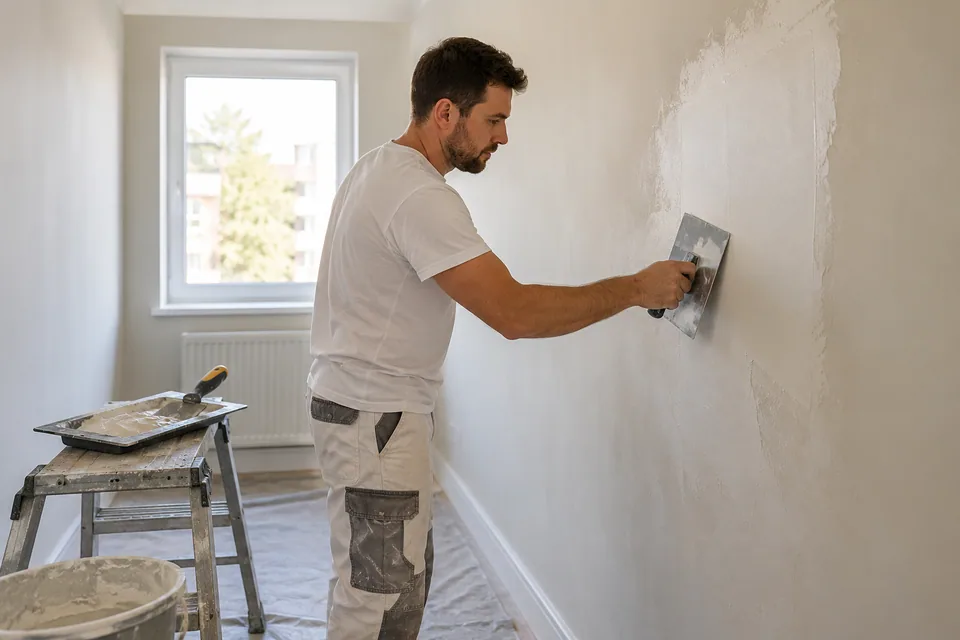
We agree preparation and finishing only when the relevant material condition and preceding responsibilities support the work. The proposal records how our appointed surfaces meet a building-controlled boundary. We review the completed interior stages and identify any shared-area action still outstanding, without presenting a private-property handover as completion of work elsewhere in the building.
We separate the apartment price from building instructions
Our quotation states the drying and reinstatement activities accepted within the property and any dependency on another appointment. Building attendance, controlled access or shared-fabric work is not silently included because it relates to the same water event. Where a confirmed boundary changes, we explain the affected activities and revised scope before extending the authorised work.
Water damage restoration questions in Canary Wharf
Can water arriving from another residential apartment be assumed suitable for an ordinary drying response without assessment?
We identify the available source information and any specialist concern first. A residential address does not establish the nature of the water or remove the need for an appropriate response to suspected contamination.
Can an apartment instruction authorise opening a controlled communal riser?
We identify the appropriate building-level permission and responsible provider separately. A private interior instruction is not treated as authority to disturb shared services or enclosures.
Will an observation supplied by the building manager be recorded as your own inspection?
We distinguish supplied information from our accessible findings. It may inform the proposal without being described as an area we entered or a measurement we took.
Does a decorative ceiling inside the flat establish responsibility for every layer above it?
No. We review the available construction and responsibility information. The location of the visible finish alone does not settle the appointment for all concealed layers.
Does a notice that the building water supply is restored confirm that the apartment incident’s cause has been resolved?
We identify the source action actually confirmed by the responsible provider. A general notice about restored supply is not automatically a report that the specific cause affecting the apartment has been corrected.
Does a building-wide incident report establish which rooms inside the apartment were affected?
We use the report for its actual scope and inspect the accepted accessible interior. A building incident description is not substituted for identification of the apartment’s affected rooms and materials.
Does your apartment handover confirm that another contractor’s shared-service work is complete?
We record our appointed work and remaining dependencies. Our interior handover is not used as completion confirmation for an independently contracted service activity.
Can a single access card be assumed to authorise entry to every affected level?
We confirm the permitted locations and access arrangement. Possession of a card does not by itself establish authority to inspect or work in every part of the building.
Related property services
Define the apartment and building interfaces
Give us the Canary Wharf building address, apartment reference and affected interior areas. We will identify the assessment and the instructions needed for the agreed restoration.